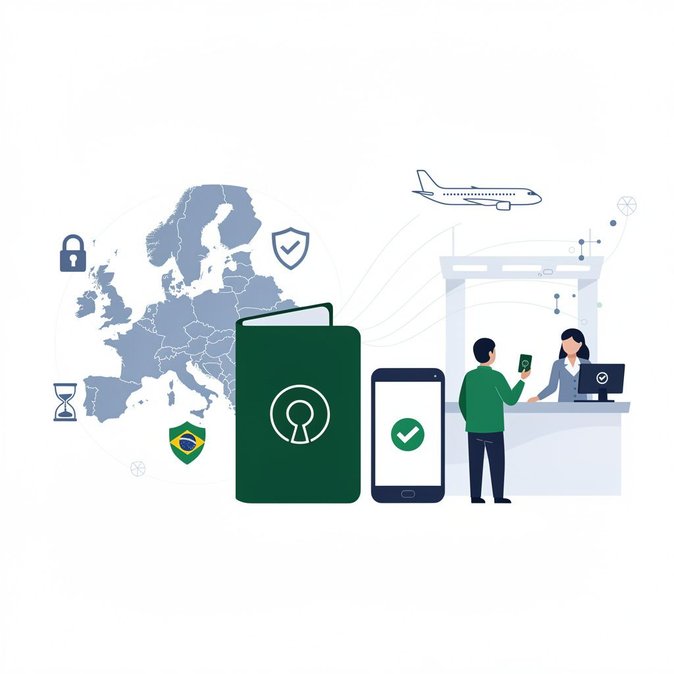
The European Commission has published Implementing Decision (EU) 2026/1970—effective 28 September—that sets detailed procedures for accessing, amending and deleting personal data in the European Travel Information and Authorisation System (ETIAS). Although ETIAS itself has been pushed to 2027, the new decision completes the legal architecture and gives member states, eu-LISA and airlines practical instructions for running the €20 travel pass. For Brazilian passport holders, the measure confirms that data collected during an ETIAS application may be retained for up to five years after the authorisation expires, but can be erased earlier if travellers request it and no alerts are pending. The decision also clarifies the appeals process: passengers denied authorisation must receive the national contact point’s reasoning within 96 hours and can seek human review before resorting to local courts. Airlines flying from Brazil to Europe—LATAM, Azul and Gol’s new Rio-Lisbon service—must connect to the EU Carrier Gateway and verify ETIAS numbers before boarding once the system goes live. Failure to do so will trigger fines of up to €5,000 per passenger and potential suspension of ground-handling licences in EU airports. Carriers are therefore advising corporate clients to build ETIAS checks into travel-approval workflows during 2027 budget planning. Meanwhile, Brazil’s Foreign Ministry said it does not intend to impose reciprocal fees on EU citizens, noting that ETIAS is “not a visa but a security clearance.” However, officials acknowledged that extra processing time could affect peak-season departures and suggested travellers apply at least 96 hours in advance once the portal opens. Travel-management companies recommend updating employee handbooks and booking tools to flag the new requirement automatically for Schengen destinations.