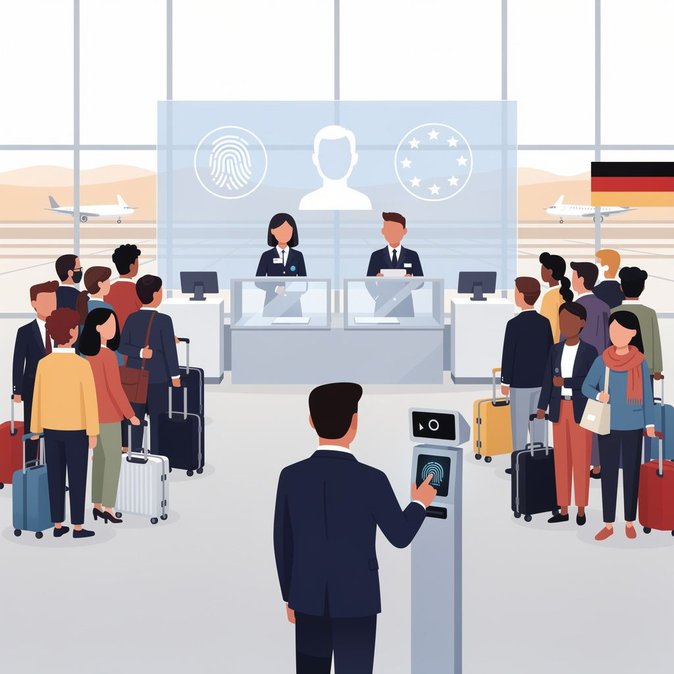
Germany’s busiest airports are bracing for longer queues after a temporary EU rule that allowed officers to skip some biometric steps under the new Entry/Exit System (EES) quietly lapsed on 6 September 2026. The safeguard—written into Regulation 2025/1534—let border posts pause fingerprint and facial-image capture for up to six hours when lines grew unmanageable. Although nine countries, including Germany, had asked Brussels to prolong the waiver, the European Commission has not published an extension. In practice, Frankfurt, Munich and Düsseldorf airports had relied heavily on the measure over the summer peak to keep transfer passengers moving. Lufthansa warned in September that without the flexibility, “dozens of daily connections” risked being missed. Fraport, Frankfurt’s operator, clocked wait times of up to 90 minutes even while the shortcut was still available. With the safety valve now gone, federal police must apply full biometric registration to every non-EU, non-EEA and non-Swiss traveller—adding roughly 30-45 seconds per person on a first entry, according to industry tests. The timing is awkward. The autumn school break (2–18 October) is pushing daily passenger numbers at Frankfurt above 200,000, while Munich’s Oktoberfest crowds are still departing. Business flyers heading to Germany’s major trade fairs—Expo Real in Munich and Anuga in Cologne—will feel the pinch most acutely because tight inbound connections leave little margin for delay. Travel-risk firm Anvil Group is already advising corporate clients to allow a minimum 120-minute buffer between scheduled landing and any onward Schengen flight. To complicate matters, reports suggest some border posts across Europe are still quietly easing checks despite the legal deadline. Because enforcement is uneven, travellers cannot rely on shortcuts being offered; Frankfurt and Munich have told airlines they will assume “full EES compliance” in their staffing models. The promised EU smartphone app “Travel to Europe,” which would let passengers pre-register biometrics, is still in pilot testing and unlikely to reach German airports before 2027. Practical take-away: anyone entering Germany on a non-EU passport should assume longer queues, especially if this is their first trip since EES went live. Travellers are urged to keep boarding passes and dated travel proofs in case patchy records later raise questions during visa or residence-permit renewals. Corporations planning relocations or short-term assignments in Germany this quarter should build extra transit time into itineraries and consider routing staff through less-busy airports where possible.
Source: The New German