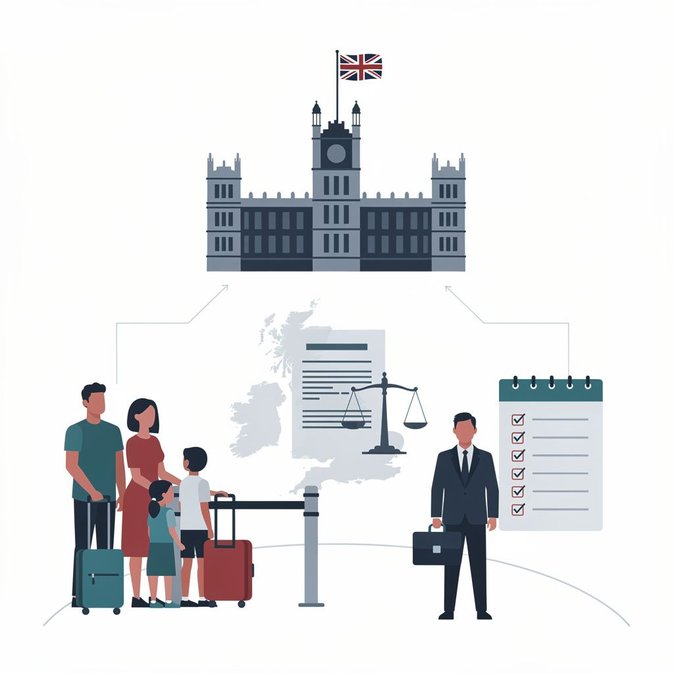
The Home Office has published the first tranche of factsheets for the Immigration and Asylum Bill introduced to Parliament today, with the headline change being a fundamental rewrite of how Article 8 of the European Convention on Human Rights (right to family and private life) is applied in immigration decision-making. Under the proposals, case-workers and tribunals will be required to give much greater weight to the ‘public interest’—defined as effective immigration control, economic contribution and compliance with UK law—when balancing claims based on family ties or private life. Family life will be expressly limited to a ‘nuclear family’ definition unless exceptional circumstances apply, and anyone outside the UK who wishes to rely on family life will need their UK-based relative to make the application on their behalf. The Bill also codifies a tougher public-interest test, closes perceived loopholes that allow overstayers to regularise status through parent-child relationships, and introduces safeguards to ensure decisions involving children and vulnerable applicants remain compliant with international obligations. The Home Office argues the reforms are necessary to curb what it says is “misuse” of Article 8 rights—pointing to internal analysis suggesting 71 % of successful in-country Article 8 grants in 2022 were made to people who had entered illegally or overstayed. For employers, global mobility teams and relocation providers the practical implications are two-fold. First, expect a sharper distinction between work-route and human-rights-route applications; staff whose stay in the UK ultimately relies on family connections rather than economic contribution may face longer timelines and higher evidential thresholds. Second, the reforms signal that future settlement strategies should place renewed emphasis on compliance from day one—overstaying even briefly could severely compromise an employee’s long-term prospects. The Bill will move to committee stage later this month, with ministers indicating an accelerated timetable aimed at Royal Assent before the end of the Parliamentary session. Businesses that rely on intra-company family moves are advised to review assignment planning, dependent policies and documentary record-keeping in anticipation of the new regime.
Source: GOV.UK – Home Office