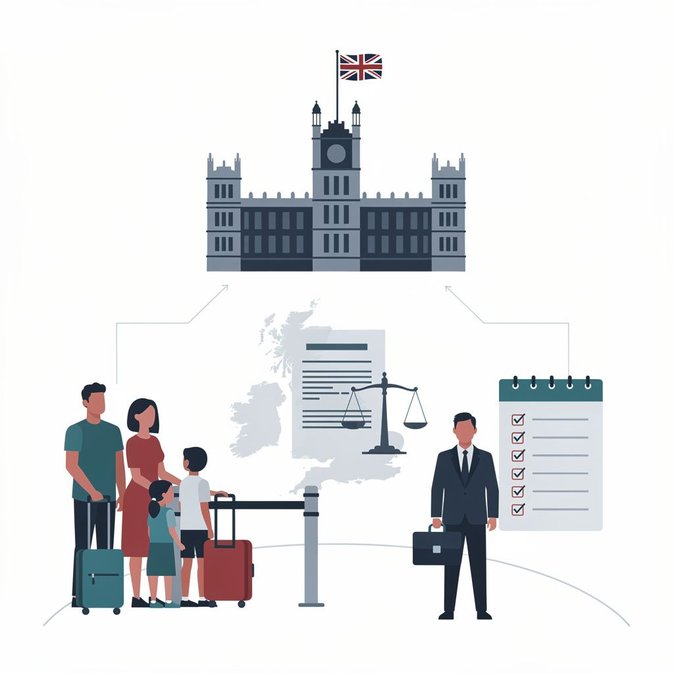
The Home Office has published the draft Immigration and Asylum Bill and an accompanying factsheet setting out how the Government intends to overhaul the way Article 8 of the European Convention on Human Rights is applied in immigration cases. Under the proposals, the concept of “family life” that can give rise to a right to remain in the UK will be limited largely to the nuclear family. Applicants who wish to rely on Article 8 family life from outside the UK will have to do so through a UK-based sponsor, bringing the decision-making focus back under UK jurisdiction. The Bill also strengthens the public-interest test so that maintaining effective immigration control and promoting economic prosperity explicitly carry significant weight when tribunals balance individual rights against removals. Home Office statistics quoted in the factsheet show that 71 % of Article 8 grants in 2022 were made to people who had entered illegally or overstayed, and that each successful main applicant represents a net fiscal cost of £141,000 over a lifetime. Ministers argue that the reforms are needed to curb abuse and restore confidence in the rules. If enacted, the legislation would dovetail with parallel measures to create an Independent Immigration Appeals Authority and to rationalise the modern-slavery framework. Employers making relocation decisions should expect a stricter evidential burden when sponsoring extended family members, while HR teams will need to adjust internal policies to reflect the narrower definition of qualifying relatives. Businesses engaging foreign talent may also find deportations of overstayers are expedited once the new balancing test is in force. Although the bill re-affirms the UK’s commitment to the ECHR, it signals a tougher domestic stance. Companies that rely on intra-company transfers or long-term secondments should consider auditing workforce records now to ensure that dependants’ leave is firmly grounded in the Immigration Rules rather than discretionary Article 8 claims.
Source: GOV.UK