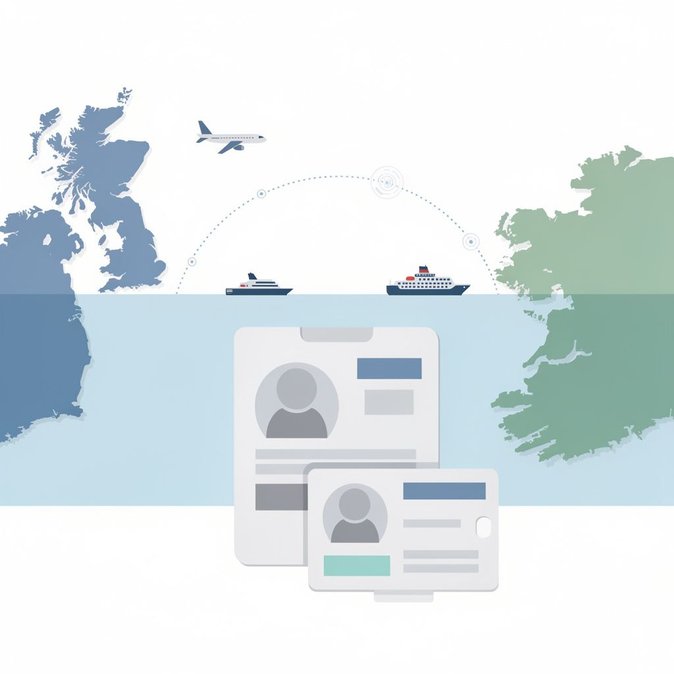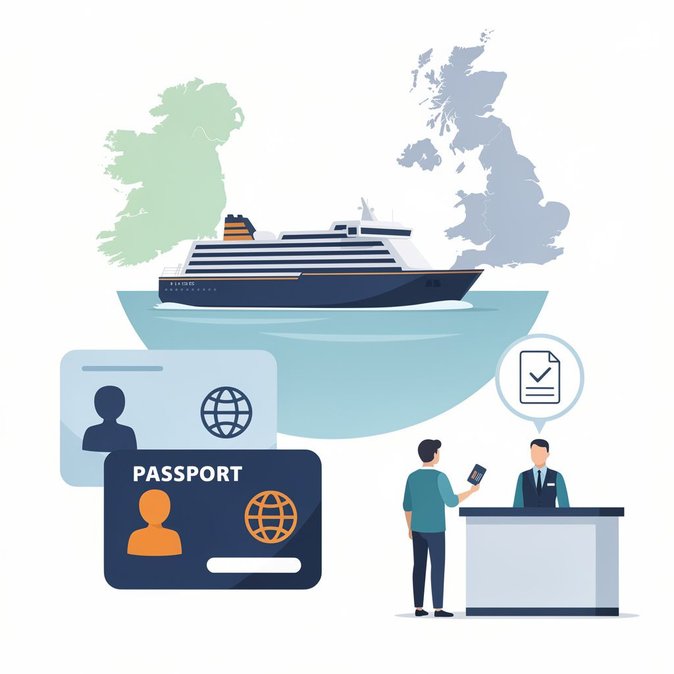
Ireland’s Department of Foreign Affairs (DFA) has quietly over-hauled the advice it gives Irish citizens and residents travelling to, or transiting through, Great Britain. In an update published on October 11 the DFA stresses that, from September 28 2026, ferry companies sailing between Ireland and Britain will only accept a valid Irish passport or Irish passport card at check-in. Driving licences, student cards and other photo ID that were long tolerated on many Irish Sea services are now explicitly ruled out. The change is driven by UK Border Force data-collection rules that require carriers to transmit full advance passenger information before departure. Ferries can only meet the requirement by scanning machine-readable passports or the Irish passport card. While the Common Travel Area (CTA) continues to give British and Irish citizens reciprocal rights of movement, carriers are entitled to set stricter document rules than the immigration authorities themselves. Air lines on Ireland–Britain routes have already required passports for several years; the ferries are now falling into line. At the same time the DFA draws attention to the phased roll-out of the UK’s Electronic Travel Authorisation (ETA) scheme. From October 2026 most non-visa-exempt passengers transiting the UK – even for a few hours en-route to Ireland – will have to secure a £20 ETA in advance. Irish citizens (including dual nationals) remain exempt, but the DFA urges them to carry proof of Irish nationality when transiting British hubs to avoid mistaken requests for an ETA. For business-travel managers the message is clear: review template travel checklists for intra-company moves that pass through Britain, ensure non-Irish assignees understand the ETA rules, and budget extra time for passport renewals. Employers with rotating technical teams that habitually board ferries on Irish driving licences will need to audit their documentation processes quickly. The update also reminds travellers that Ireland, as a non-Schengen state, will not participate in the EU Entry/Exit System scheduled for launch elsewhere in 2025. However, Irish carriers connecting into continental Europe will have to collect biometric data for onward passengers once EES is live, making robust passport compliance all the more important.
Source: Travel Extra