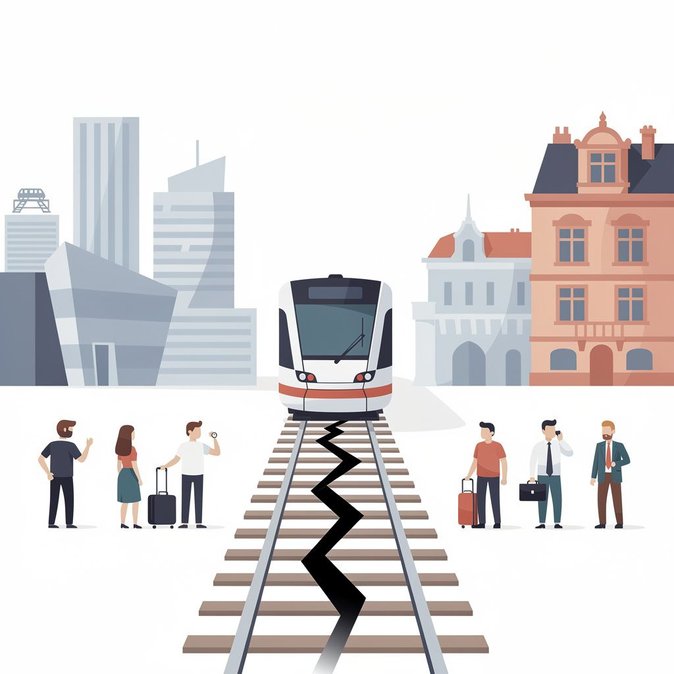
Germany’s train-drivers’ union GDL has intensified its rolling industrial campaign by targeting Saarbahn, the hybrid tram-train network that links Saarbrücken city centre with the French border at Sarreguemines. Strike-tracking site Strike Tracker reports that drivers walked out at 03:00 on Friday, 23 October 2026, and will continue intermittent stoppages until at least 31 October. Although classified as “minor” on a national scale, the action disrupts a key regional connector used by cross-border commuters working for automotive suppliers clustered around the Saar and Moselle rivers. Business-travel analysts at Advito estimate that up to 12,000 daily passenger journeys—including many French residents employed in Germany under the EU free-movement regime—could be affected. Unlike Deutsche Bahn main-line strikes, Saarbahn disruptions are not covered by guaranteed minimum services, prompting local employers such as ZF Friedrichshafen to activate car-pool allowances. GDL is demanding a 10.5 percent pay rise and a reduction in the standard weekly working time from 38 to 35 hours for shift staff, citing record inflation and labour shortages. Saarbahn management says meeting the demands would jeopardise planned fleet electrification and EU ‘Fit for 55’ funding earmarked for 2027. The strike also complicates Germany’s new Deutschland-Ticket reimbursement rules, which require local transport providers to offer compensation after 20-minute delays—a compliance headache for HR and mobility managers processing staff expense claims. Travellers connecting to ICE services at Saarbrücken Hbf should allow at least 45 minutes for replacement buses or shared taxis. French SNCF TER services from Metz remain unaffected, offering an alternative route via Forbach with onward regional bus travel. The Federal Railway Authority has called both parties to exploratory talks next Tuesday, but GDL has vowed to maintain pressure until “a credible financial package” is on the table. With further GDL ballots possible at regional operators SWEG and AVG, employers across southwest Germany are advised to review remote-work options and reinforce communication on cross-border tele-commuting tax thresholds, which differ under the Franco-German agreement extended earlier this year.
Source: Strike Tracker