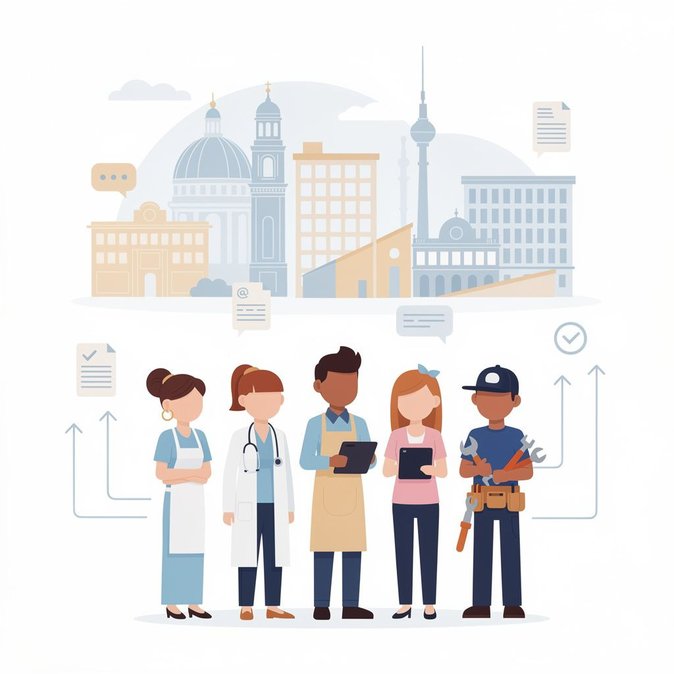
Germany’s Cabinet on 11 November endorsed the 15th Federal Integration Report, which paints the most optimistic picture since the survey began in 1999. According to the study, 21.8 million people with an immigrant background now live in Germany—over 26 % of the population—and their labour market integration has reached record levels. The report emphasises that second-generation migrants achieve markedly higher educational qualifications than their parents and are increasingly moving into skilled occupations. Sectors such as healthcare, logistics and hospitality rely on foreign-born workers for up to a fifth of their staff. However, the analysis identifies persistent gaps: recently arrived women face lower employment rates and wage disparities, while access to affordable housing and recognition of foreign credentials remain hurdles. The government pledged to expand job-related language training, speed up the Skilled Immigration Act’s fast-track (‘§81a’) procedure and digitalise recognition processes. For employers, the findings underscore the importance of diversity strategies and of lobbying for smoother administrative pathways. HR leaders should prepare for stricter reporting obligations on diversity metrics that the coalition is expected to include in the forthcoming Workforce Participation Act. Global mobility teams should note that the report calls for an evaluation of the Blue Card salary threshold in mid-2027, signalling possible changes that could widen the talent pool further.
Source: German Federal Government