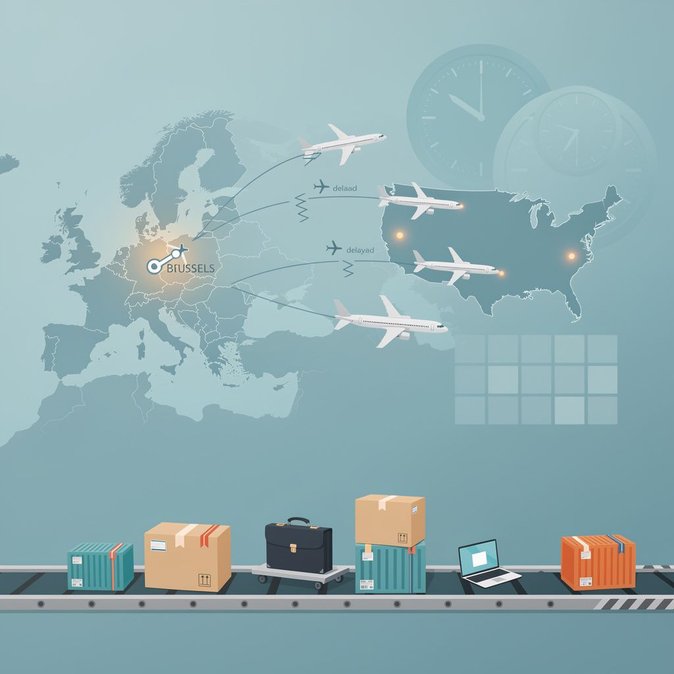
Just hours after EUROCONTROL’s overnight embargo ended, the US Federal Aviation Administration announced at 02:25 CET on 14 November that it had resolved the communications failure that paralysed American airspace. The nationwide ground stop – the longest in 25 years – forced the cancellation of more than 8,200 flights on Friday and a further 3,200 on Saturday morning, leaving aircraft and crews badly out of position. For Belgian operators the question now shifts from ‘can we depart?’ to ‘how quickly can we get our metal back into the right place?’. Brussels Airlines was forced to cancel its Chicago turn-round and is assessing whether it can mount an extra rotation on Sunday to repatriate stranded passengers. United Airlines likewise scrubbed its BRU–ORD service and is offering re-accommodation via London and Frankfurt. Cargo carriers based at Liège face particular pressure: missed slots at US gateways mean perishable and high-value shipments risk breaching time-temperature limits. Industry analysts say the disruption is a stark reminder for multinationals of the need for robust ‘Plan B’ routings in corporate travel programmes. Companies with high volumes of Belgium–US travel – notably in pharmaceuticals, chemicals and advanced engineering – are revisiting their preferred-carrier agreements to ensure access to secondary hubs such as Amsterdam, Paris or Zurich if direct services remain constrained over the weekend. Travellers heading to North America over the next 48 hours should expect rolling delays as airlines rebuild rotations. Mobile alerts from airlines and Brussels Airport’s BRU app remain the most reliable real-time information sources; third-party trackers may lag official updates by up to 30 minutes while schedules stabilise.
Source: Aviation24.be