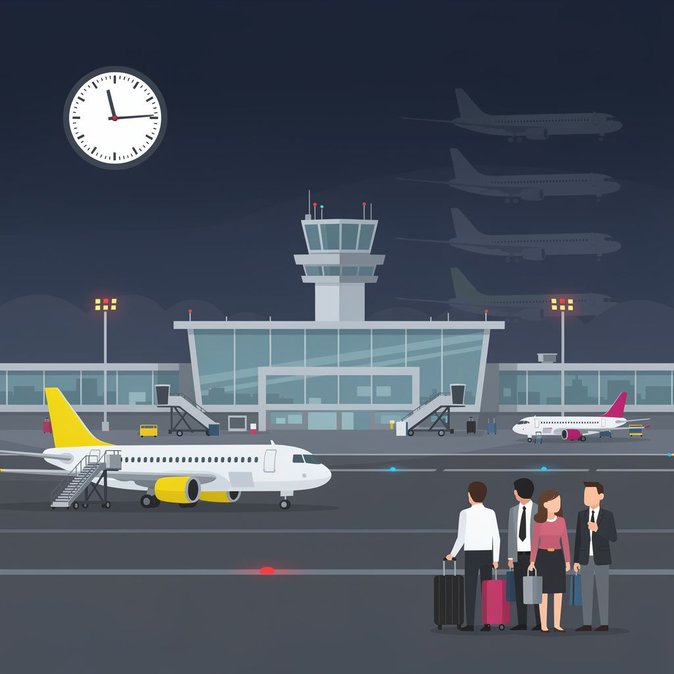
Brussels South Charleroi Airport (CRL) entered its fourth consecutive night of disruption on 20 September after air-traffic controllers employed by Belgian navigation service provider Skeyes walked out again between 22:00 and 08:00. The industrial action, which began on 16 September and is scheduled to last until 10 October, requires the tower to shut down completely during the nocturnal window. Without controllers on duty, aircraft cannot land, take off or remain parked overnight, forcing airlines either to divert, reschedule or cancel affected services. Initial data seen by the airport operator show an average of 30-40 cancellations per 24-hour cycle, equivalent to around 15 % of Charleroi’s total daily schedule. Ryanair—by far the airport’s largest carrier—has trimmed evening arrivals from destinations such as Bari, Valencia and Kraków along with the corresponding early-morning departures. Wizz Air and Air Corsica have followed suit. While daytime operations technically remain possible, out-of-position aircraft and crew mean knock-on delays can last well into the afternoon, complicating connections for business travellers and tour operators. The dispute centres on allowances for night work and roster stability. Union representatives say negotiations stalled after management refused to back-date a proposed premium. Skeyes maintains that the offer on the table “reflects market conditions” and that further concessions would endanger its 2026 budget. Talks mediated by Belgium’s federal conciliator broke down late on Friday, prompting unions to file a fresh strike notice covering the next three weeks. From a passenger-rights perspective, an air-traffic-control strike is considered an ‘extraordinary circumstance’ under EU Regulation 261/2004, so airlines are exempt from cash compensation even though they must still provide re-routing, refunds and care. Travel-management companies are therefore advising corporate clients to book flex fare classes, allow longer connection buffers and consider routing via Brussels Airport (BRU), which remains unaffected. Firms with time-critical cargo have been encouraged to truck shipments to Liège or Maastricht where night operations continue normally. Should the walk-out continue until 10 October, more than 800 flights could be lost—eroding Charleroi’s post-pandemic recovery and inconveniencing tens of thousands of travellers in the peak autumn conference season. Business-immigration advisers also warn that visa-on-arrival holders transiting through CRL must now factor in the risk of overnight stranding and ensure Schengen validity for any unexpected diversions.
Source: TravelExtra