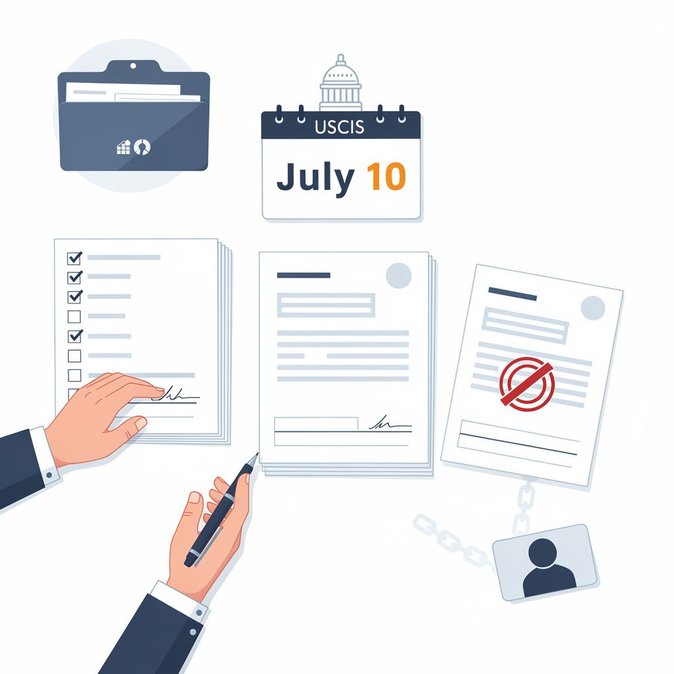
A wave of client alerts on June 11 reminded employers that a Department of Homeland Security interim final rule, “Signatures on Immigration Benefit Requests,” will take effect on July 10, 2026. Although first published in the Federal Register on May 11, the rule’s looming deadline has triggered renewed compliance activity in the last 24 hours as law firms circulate checklists and webinar invitations. Key provision: USCIS officers may reject—or even deny after acceptance—any benefit request that does not bear a valid signature. Photocopied or scanned “wet” signatures remain acceptable, but USCIS can later ask for original ink pages and will keep filing fees if a signature is ruled deficient post-intake. Why it matters: Employers accustomed to last-minute FedEx runs or digital-signature workarounds for Form I-129 (H-1B, L-1, O-1), Form I-140 immigrant petitions, or I-485 green-card applications must now institute stricter document-control protocols. A single missing stroke or unauthorized signatory could void premium-processing requests, trigger status gaps and force costly re-filings. Best practices emerging from legal briefings include maintaining signature specimen libraries for authorized executives, using secure DocuSign-style audit trails where electronic signatures are permitted, and flagging any “placeholder” filings for immediate follow-up with original ink pages. Foreign nationals filing self-petitions—such as EB-1A or NIW cases—should retain courier records proving timely signatures in case USCIS requests originals months later. Action items before July 10: (1) audit all draft and recently filed cases for signature conformity; (2) update corporate delegation resolutions so that only authorized signatories execute immigration forms; (3) train HR coordinators on new rejection-risk points to avoid disrupted assignments.