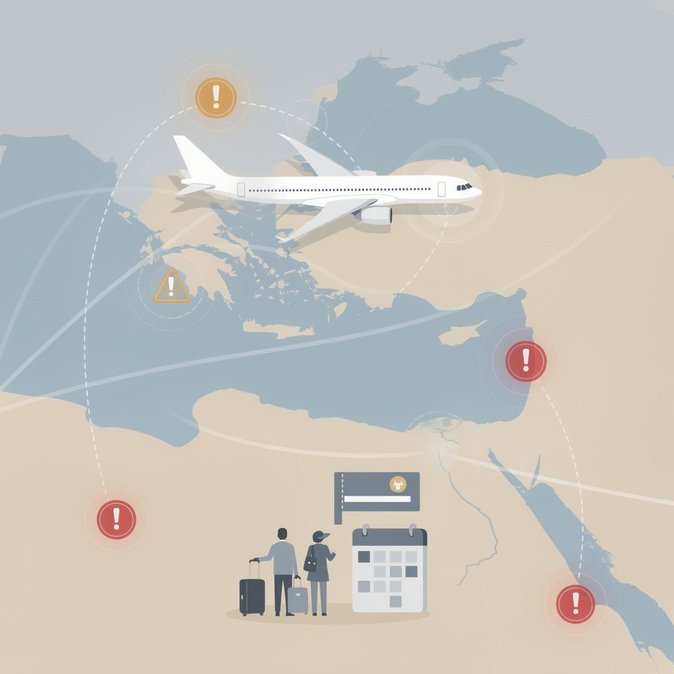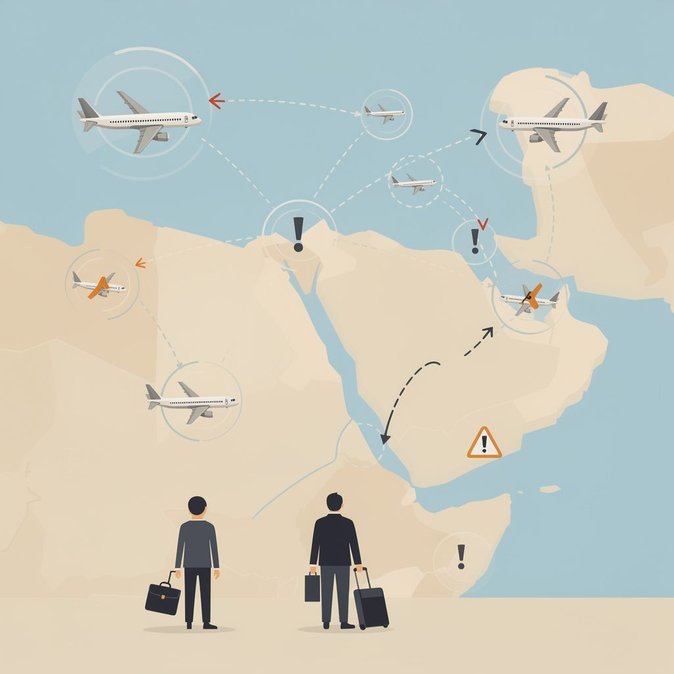
Renewed hostilities between the United States and Iran have spilled over into Gulf aviation, forcing the United Arab Emirates’ leading carriers to slash services to Kuwait and southern Saudi Arabia this week. In a notice issued in the early hours of July 20, Emirates confirmed it had cancelled at least ten rotations on the busy Dubai–Kuwait route after Kuwait International Airport intermittently shut its runways amid missile- and drone-attack fears. Etihad Airways followed suit, axing flights EY653/654 between Abu Dhabi’s Zayed International Airport and Kuwait for 19-20 July, while Air Arabia and Flydubai reported rolling delays and last-minute aircraft swaps. The disruptions are the most acute the UAE has faced since regional airspace reopened in late May. Although the UAE’s own skies remain fully operational, airlines must now thread narrow corridors to avoid active conflict zones over the northern Gulf, adding up to 90 minutes to block times and creating crew-duty bottlenecks. Operations managers told The National that “buffer aircraft” normally used for ad-hoc charters have been redeployed to cover delayed rotations, squeezing overall capacity at the height of the summer rush. For businesses, the knock-on effects are immediate: Kuwait is a key oil-and-gas shuttle and an important node for regional headquarters staff who rely on same-day meetings in Dubai. Multinationals report postponing board sessions and diverting travellers through Doha or Riyadh at higher cost. Travel-risk consultants are advising firms to build 24–48 hours of slack into itineraries, keep electronic boarding passes refreshed and book hotels with flexible check-in policies in case of overnight diversions to Dammam or Bahrain. UAE authorities have not imposed formal flight caps, but the General Civil Aviation Authority reiterated that safety remains paramount and urged passengers to “stay in close contact with their airlines.” Analysts say the episode underscores the fragility of regional hub-and-spoke models and the importance for corporate travel managers of maintaining multi-airport contingency plans. Should the conflict widen, expect further schedule volatility on secondary Gulf routes and upward pressure on short-haul fares through August.
Source: The National