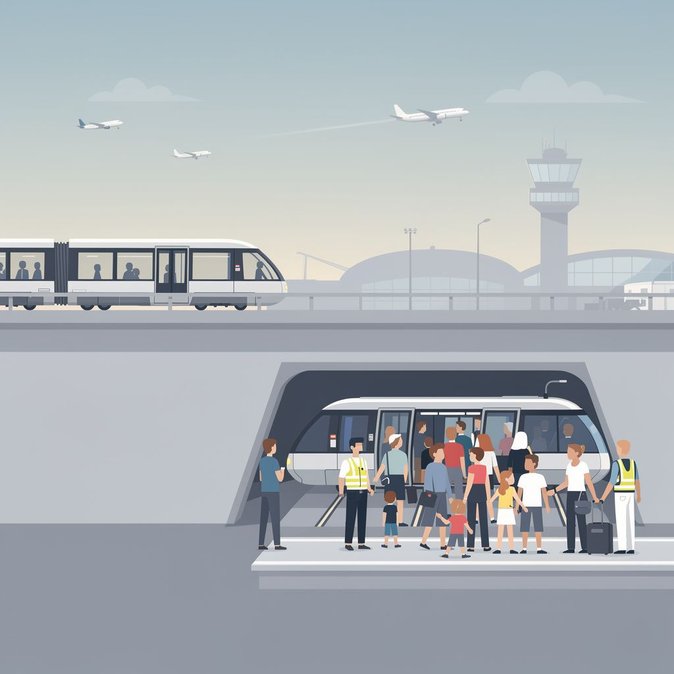
Dozens of travellers experienced an unexpected adventure at Zurich Airport on Monday afternoon when the automated Skymetro people-mover ground to a halt halfway between the main terminal and the E-gates. Airport authorities confirmed that around 50 passengers were trapped for more than twenty minutes before emergency teams guided them through an evacuation tunnel and brought them safely back to the terminal. No injuries were reported, but several travellers missed onward connections and a handful of short-haul departures were delayed. The Skymetro—nicknamed the “Heidi-Bahn” by locals—carries up to 2,000 people per hour and is a critical link for transfer traffic at Switzerland’s busiest hub. The breakdown occurred at the height of the summer rush, with SWISS forecasting some 60,000 passengers a day during July and August. While the incident was contained quickly, it underscored the vulnerability of hub operations that depend on fully automated systems. Airport operator Flughafen Zürich AG said initial inspections point to a sensor fault in one of the driverless train’s guidance systems. A complete diagnostic review will be carried out overnight, and a reserve shuttle has been activated until full service is restored. Travellers connecting to long-haul flights were re-routed through manual security checkpoints—a process that added up to 25 minutes to minimum connection times. For corporate travel managers the message is clear: build extra buffer time into Zurich itineraries over the coming days, especially for tight intra-Schengen or Swiss-domestic connections. The airport maintains that punctuality targets remain unchanged, but union representatives for ground staff called for a “comprehensive stress-test” of ageing infrastructure before traffic volumes peak again in early August. In practical terms, passengers should monitor flight apps closely, arrive early at the departure gate area, and be prepared for temporary signage changes inside the airport. The incident will also feed into Switzerland’s broader debate about how much redundancy is required in critical transport systems as traffic rebounds to record levels in the post-pandemic era.
Source: Tagesschau