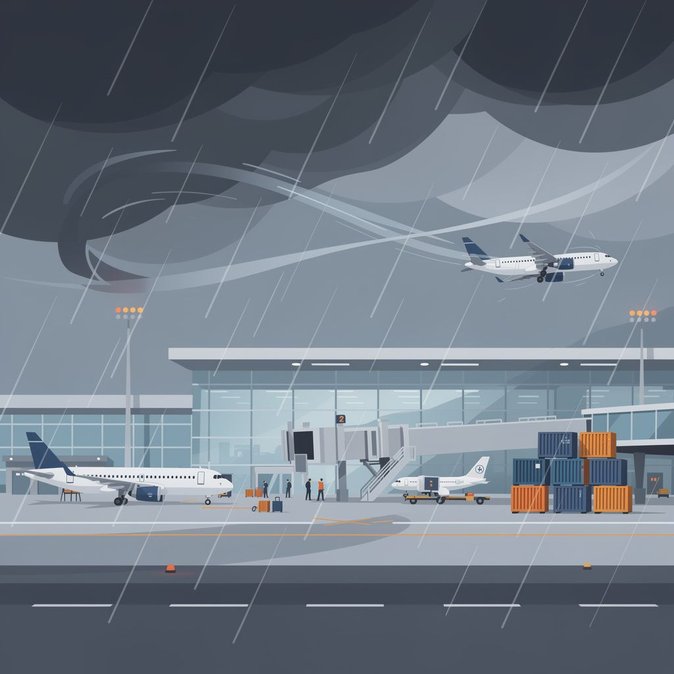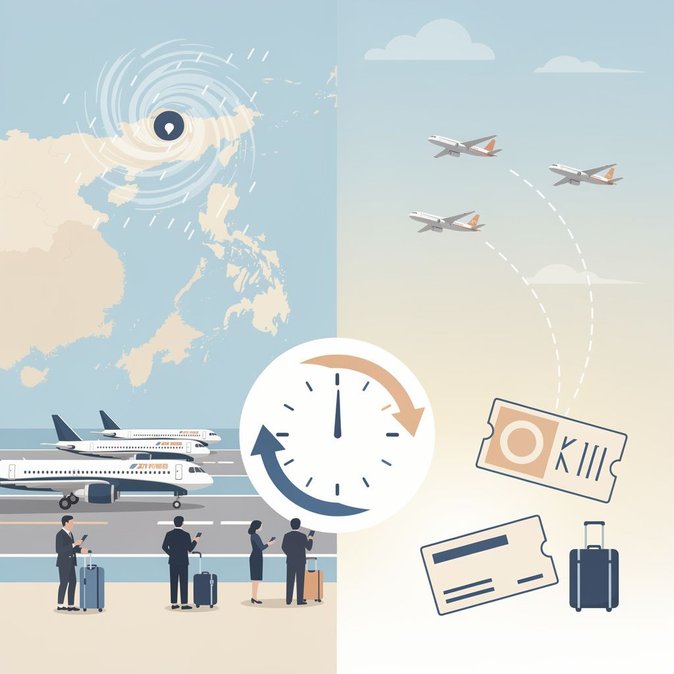
Carriers across East and Southeast Asia issued special ticket waivers on 25 July to cope with Typhoon Noul’s impact on Hong Kong and coastal China. Vietjet Air was among the first, moving its Phu Quoc–Hong Kong rotation from 25 to 26 July and offering affected passengers free changes within seven days. Xiamen Airlines and China Southern quickly followed, extending no-penalty date changes and refunds for tickets involving Shenzhen, Guangzhou, Hong Kong, Zhuhai, Macao and Shantou between 25–27 July. China Southern’s bulletin applies to all CZ-coded tickets purchased before 10:00 on 25 July, allowing one free change to any flight on the same sector within three days. It also waives the fare-difference surcharge if the same cabin is not available—a policy last used during Typhoon Saola in 2023. Xiamen Airlines’ policy is similar but covers flights to or from Fujian in anticipation of heavy rainfall. Airlines note that the CAAC’s ‘Regulation 88’ classifies typhoon disruption as force majeure, enabling carriers to re-book passengers on alternative airlines without the usual prorate paperwork. GDS providers expect unusually high call volumes through Monday; mobility managers should therefore encourage travellers to process changes via airline apps, which are prioritised in the queueing system. Travel insurance intermediaries remind corporates that claim eligibility varies. Policies triggered by ‘extreme weather’ often require proof that the relevant airport officially closed. Mobility teams should save carrier bulletins and Civil Aviation Notice-to-Airmen (NOTAM) screenshots to support any downstream expense claims. Because Noul coincides with the peak summer expatriate-rotation window, experts forecast seat shortages into early August. HR departments repatriating staff at the end of schooling contracts should secure backup routings via inland hubs such as Xi’an or Chongqing.