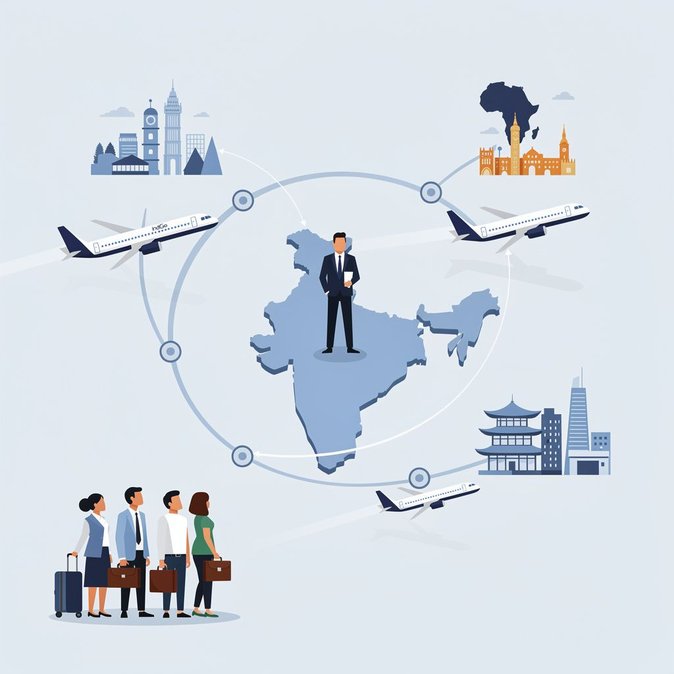
India’s largest airline, IndiGo, confirmed late on 3 August that former IATA Director-General Willie Walsh has formally assumed the role of Chief Executive Officer at InterGlobe Aviation, the carrier’s parent company. Walsh’s appointment ends a four-month search for a leader who can steer IndiGo through an ambitious fleet-renewal programme and an intensifying battle for long-haul corporate traffic. In an internal memo seen by market watchers, Walsh told employees that the airline’s next growth phase will be “unapologetically global”, with an explicit target of doubling the share of international revenue to 30 percent within three years. For mobility managers the change matters because IndiGo already controls more than 60 percent of India’s domestic capacity and, thanks to aggressive Airbus A321LR and XLR orders, is poised to add non-stop services to Western Europe, East Asia and Africa from secondary Indian cities. Shorter routings reduce duty-of-care risks, allow same-day itineraries, and could shave 10–15 percent off total trip costs compared with one-stop Gulf hub itineraries. Walsh also hinted at tie-ups with airport operators—New Delhi has floated a policy paper that would allow airport owners to start ‘captive’ airlines—opening the door to more integrated travel products. Finally, he pledged to “professionalise” IndiGo’s disruption-handling after last December’s pilot rostering crisis, a sore point for corporate travel buyers. Taken together, the strategy could give multinationals based in India a viable alternative to the Gulf super-connectors while pushing Air India to accelerate its own transformation.