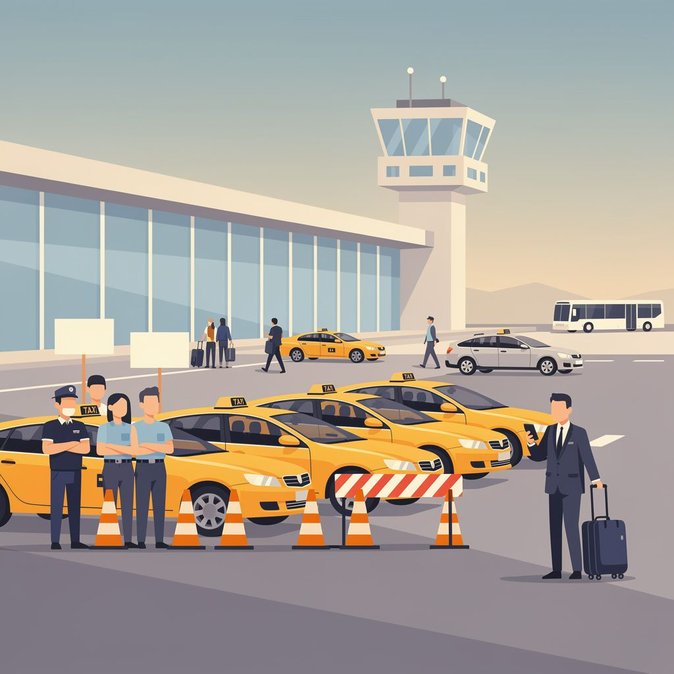
Taxi operators serving Pafos International Airport have voted to launch an open-ended strike as early as Friday, 25 September, unless the Ministry of Transport addresses long-running complaints over the allocation of pick-up bays, fare regulation and the presence of unlicensed ride-hailing vehicles. The drivers, organised through the local taxi association OSYPA, met at dawn on 23 September and agreed that the first step will be a 24-hour work stoppage; if no agreement is reached, they will escalate to an indefinite walk-out and physically close the designated taxi car park outside the arrivals hall. The dispute centres on a set of new airport traffic rules introduced last month to relieve congestion. Drivers argue that the rules push licensed taxis farther from the terminal while allowing pre-booked transfer vans to queue curb-side, eroding their share of lucrative tourist fares. They also want the fares chart—last updated in 2024—to be revised to reflect higher fuel costs and inflation, saying their net income has fallen by more than 15 % this summer. Should the strike go ahead, the immediate impact will be felt by the 6,000–8,000 passengers who pass through Pafos daily during the shoulder season, many of them business travellers connecting to Limassol or the EU’s Eastern Mediterranean gas corridor. Hermes Airports, which operates Pafos and Larnaca, says it has contingency plans that include rerouting passengers to the inter-city Kapnos shuttle and increasing police presence at the curb to prevent blockades. For corporates, the prospect of disrupted surface transport raises practical challenges: hotel transfers may need to be prepaid and documented, travellers should expect longer queues for shuttle buses, and mobility managers should brief employees about alternative options such as pre-arranged rides with vetted chauffeurs. If the strike drags on into October—the start of the offshore energy conference season—multinational delegations may need to divert traffic through Larnaca or even through Ercan in the north, adding time and compliance checks. Long term, the confrontation underscores Cyprus’s broader mobility dilemma: as the island pushes to diversify tourism beyond the beach holiday model and attract high-value conferences and tech nomads, friction at the first point of entry can undercut competitiveness. The government is under pressure to find a balanced solution that keeps airport flows smooth while protecting local livelihoods—a recurring theme across Europe’s secondary airports in the post-pandemic rebound.
Source: CyprNews