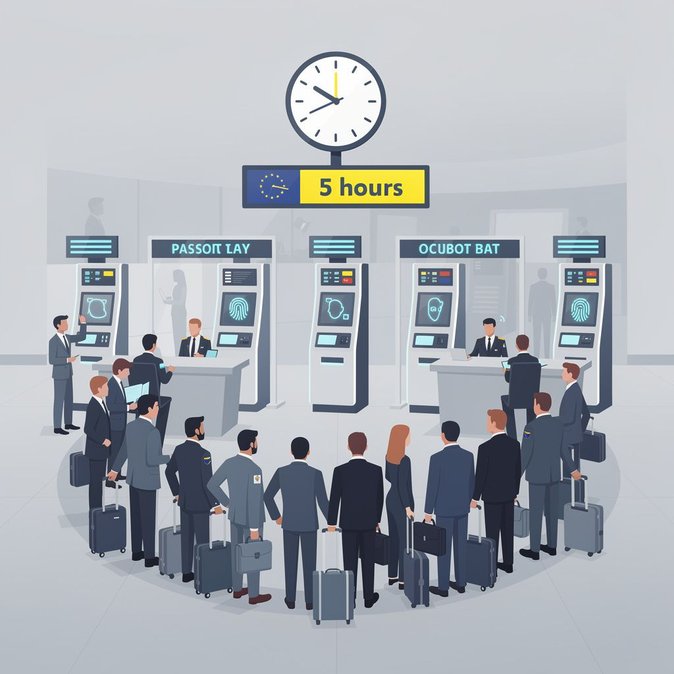
Almost one year after France rolled out the EU Entry/Exit System (EES), passengers are still experiencing severe delays at busy external-Schengen checkpoints. Aviation trade journal Air Journal reported on 27 September that travellers arriving at Brussels and Paris-Charles de Gaulle last weekend queued up to five hours for manual passport inspection after self-service kiosks crashed intermittently. Under EES, all non-EU visitors—including British and US business travellers—must provide four fingerprints and a facial image the first time they enter the Schengen Area after 12 October 2025. While Paris airports installed more than 300 biometric kiosks, staff shortages and software updates have hampered throughput. Airlines complain that late-arriving passengers have missed connections, forcing costly overnight rebooking and upsetting minimum-rest calculations for flight crews. French border-police sources told Air Journal that new pre-registration tablets, scheduled to be tested at Orly and the Eurotunnel terminal in Coquelles in October, should cut first-time enrolment from eight to three minutes. Until then, carriers are urging premium passengers to allow at least three hours between connecting flights and reminding corporate clients that fast-track lanes do not exempt them from biometric capture. Mobility managers should update traveller briefings: anyone who last entered before October 2025 will need full biometric enrolment on their next trip to France. Companies using posted-worker rotas should stagger arrivals to avoid group delays that could breach mandatory induction timelines. Finally, ensure that travel-risk insurance covers missed-connection costs attributable to border-control delays.
Source: Air Journal