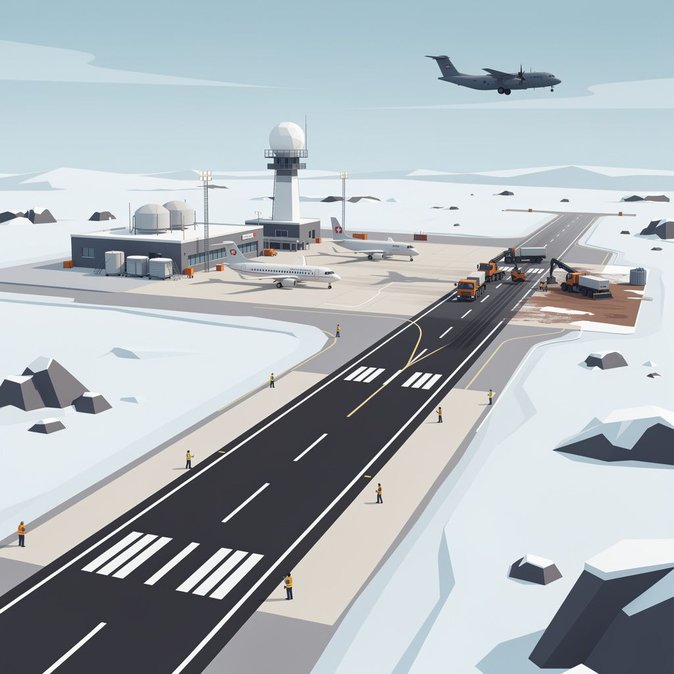
Transport Canada has earmarked $85.5 million from the new Arctic Infrastructure Fund to rehabilitate the runway and taxiways at Rankin Inlet Airport, a critical lifeline for Nunavut’s Kivalliq region. The funding announcement, made on September 28 at the formal opening of the airport’s new terminal, will resurface more than 141,000 m² of pavement and extend the runway’s service life by up to two decades. Rankin Inlet handles passenger traffic, medevac flights and seasonal heavy-lift cargo that supplies remote communities and mining operations across Canada’s north. The airfield also serves as a Northern Operational Support Node for the Canadian Armed Forces, capable of accommodating CF-188 Hornet jets and large transport aircraft. By pairing civilian and defence investments, Ottawa aims to bolster both community connectivity and Arctic sovereignty. For northern businesses, a reliable runway means fewer weather-related diversions, more consistent cargo schedules and improved prospects for tourism development. The upgrade should also reduce operating costs for carriers that currently face weight penalties during spring thaw and autumn freeze-up. The project will be staged to keep the airport open, with most heavy work scheduled during the short Arctic construction season in 2027. The investment is the first major disbursement from the $1 billion Arctic Infrastructure Fund unveiled in Budget 2025, signalling Ottawa’s intent to back dual-use projects that blend economic development with strategic defence objectives. Mobility specialists moving staff or equipment to Nunavut should anticipate improved reliability on the Winnipeg–Rankin Inlet and Yellowknife–Rankin Inlet corridors once work is complete. Transport Canada will release a detailed construction timeline later this fall, and local Indigenous businesses are expected to receive priority consideration in procurement—an opportunity for organisations looking to enhance Indigenous-participation metrics in their northern supply chains.
Source: Transport Canada