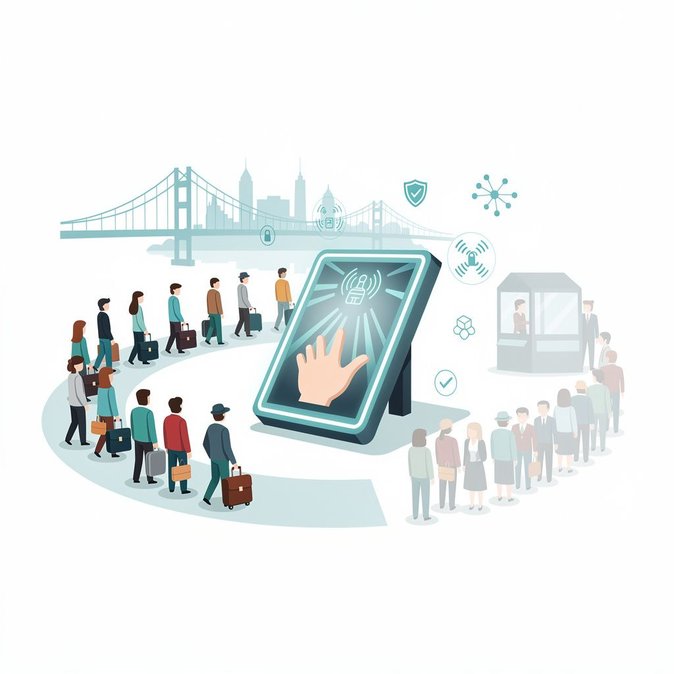
Brazilian Customs officers on the Friendship Bridge between Foz do Iguaçu (Paraná) and Ciudad del Este (Paraguay) began live trials of a palm-print identification system at 7 a.m. on October 1. The pilot forms part of a broader government programme to create “smart borders” able to process rising cross-border traffic without sacrificing security. How the pilot works – Travelers who agree to participate stop at a kiosk where a contact-free reader captures an infrared image of the entire palm. The template is instantly matched against the Federal Revenue Service’s watch-lists and migration databases. A green light authorises entry, while a red light triggers secondary inspection. During the first phase the process remains voluntary; border agents will collect traditional passport data in parallel to validate performance metrics. Why it matters for mobility – The Friendship Bridge is Brazil’s busiest land crossing: prior to the pandemic it handled around 32 000 pedestrian crossings per day. The new technology, if successful, promises to cut average processing time for walkers from the current 45–60 seconds to under 15 seconds, easing chronic congestion and giving compliance-minded travellers a faster, touchless experience. Officials also see the biometric log as a tool to curb illicit re-entries and improve traceability of overstays. Business implications – Thousands of Brazilian and Paraguayan commuters cross daily to work in retail and logistics hubs on both sides of the border. Faster clearance could translate into longer shopping windows and leaner supply-chain runs for companies that rely on same-day pickups in the binational free-trade zone. If expanded to vehicular lanes, transport firms anticipate savings on driver overtime, fuel and refrigeration costs. Technology suppliers—including two Brazilian start-ups that built the AI matching engine—are watching the test closely as a springboard for deployments at airports and sea ports. Next steps – The Revenue Service will run the trial for 45 days, measuring throughput, false-match rates and user acceptance. A positive evaluation would pave the way for Phase 2, extending palm biometrics to motorcycles and private cars by early 2027. The Ministry of Ports and Airports has already earmarked budget to install the same readers at the Guarulhos and Galeão international terminals during the first half of next year, part of Brazil’s new National Biometric Strategy announced in August.
Source: Almanaque Futuro