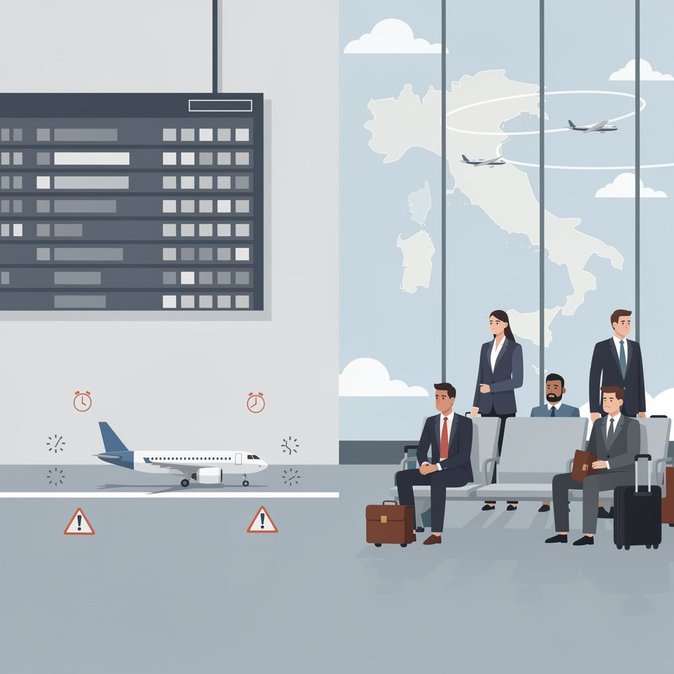
Airports from Milan to Palermo experienced cancellations and cascading delays on 30 September as Italian air-traffic controllers staged a four-hour national strike from 13:00 to 17:00. The walk-out, organised by the UILTrasporti union against staffing shortages and pay erosion, involved both ENAV radar operators and Techno Sky maintenance engineers. ITA Airways pre-emptively cancelled 29 % of its schedule, while low-cost carriers thinned peak-hour rotations. Although the civil-aviation authority ENAC published a list of “volI garantiti” (guaranteed flights) covering humanitarian, inter-continental and public-service routes, many domestic and short-haul European services were scrubbed. Travellers connecting onwards from Rome or Milan frequently missed evening long-haul departures, forcing overnight re-routing at carriers’ expense. The disruption highlights Italy’s congested autumn strike calendar: the Transport Ministry’s observatory lists 25 separate actions affecting aviation between now and mid-November, including a 24-hour EasyJet cabin-crew stoppage on 16 October. Mobility teams should therefore build slack into itineraries or favour rail for intra-Italian hops where feasible. For employers, the strike triggered classic EU261 liability issues. Where cancellations resulted directly from the industrial action, compensation is not due, but airlines must still offer re-routing or refunds plus care and assistance. HR departments should remind staff to keep receipts for meals and hotels incurred during the disruption and to check company travel-insurance policies for supplemental coverage. Unions warn further actions are possible if contract talks with ENAV stall; observers note that controller head-count has fallen 8 % since 2022 even as post-pandemic traffic has rebounded to 96 % of 2019 levels. Companies with time-sensitive projects in Italy should monitor union communiqués and maintain flexible booking policies.
Source: Sky TG24 / ENAC