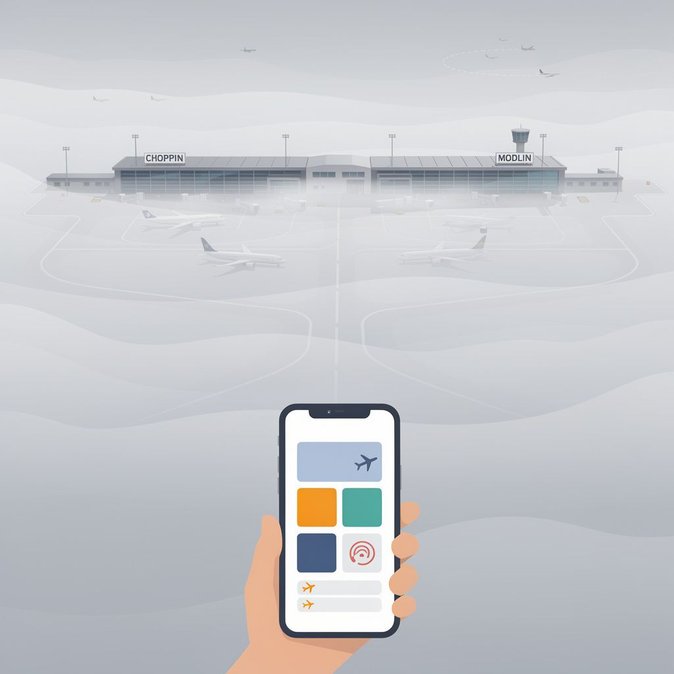
A dense radiation fog settled over central Mazovia overnight, prompting the Polish Institute of Meteorology and Water Management (IMGW) to issue a level-1 warning for Warsaw from 22:00 on 4 October until 09:00 on 5 October. Visibility at Chopin Airport dropped below 200 metres at times, triggering Low Visibility Procedures (LVP) and reducing runway capacity by 40 %. Live departure boards showed the knock-on effect: between 05:00 and 10:00 at least 23 flights left more than 45 minutes late, including British Airways 845 to London and LOT’s morning shuttle to Brussels. Two Lufthansa services diverted to Katowice, bus-bridging passengers back to Warsaw once conditions improved. Warsaw-Modlin, the capital’s secondary airport, experienced similar disruptions, with Ryanair cancelling its 07:10 rotation to Oslo. For business travellers, the lessons are familiar yet often overlooked. Airlines operating from Warsaw require checked bags by D-45 even when departures slip, meaning late-arriving passengers still risk being off-loaded. Companies running same-day out-and-back trips should build fog buffers into meeting schedules from October through March; historical data show an average of 12 LVP days per month in that period. Airport authorities have accelerated installation of advanced ground-movement radar and LED stop-bar lighting on the southern taxiway, a €24 million project co-funded by the EU’s Connecting Europe Facility to be completed before Euro 2028 traffic spikes. Once operational, the system should cut capacity loss on foggy mornings to 20 %. In the meantime, travel managers can mitigate disruption by advising travellers to keep airline apps installed and enable push notifications, as carriers at Chopin increasingly rely on digital rebooking rather than staffed desks during weather events.