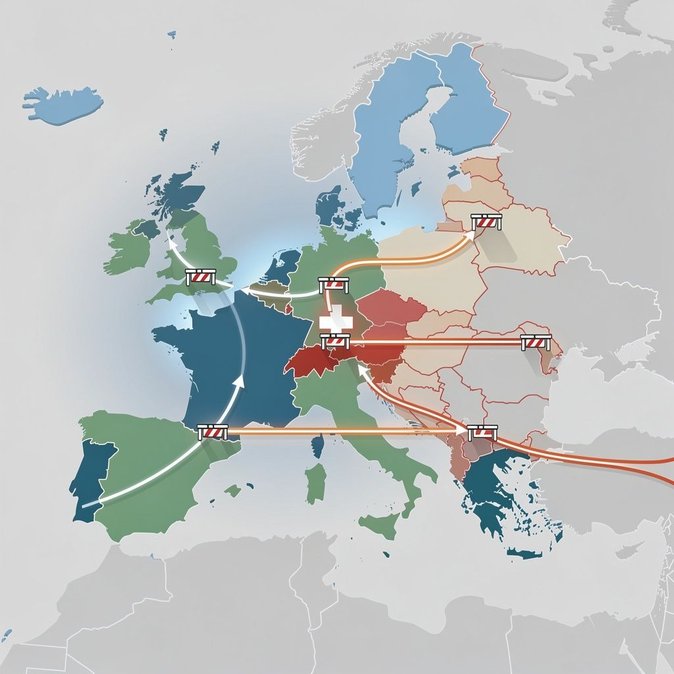
During President Guy Parmelin’s three-day working visit to New Delhi (5–7 October 2026) Switzerland and India signed two landmark instruments designed to make the movement of people between the countries more predictable and business-friendly. The first is a Migration and Mobility Partnership Agreement that creates a formal framework for processing visa applications, returns and readmission requests. For Swiss employers this matters because India is already the third-largest source of highly-skilled non-EU talent in Switzerland, especially in ICT, engineering and life-sciences. Under the agreement both sides pledge to streamline work-permit procedures, share biometric data to combat document fraud and open an annual dialogue on quotas, salary thresholds and social-security coordination. The pact should reduce today’s average processing time for Indian work visas (currently around 8–10 weeks) and give cantonal authorities clearer criteria for labour-market tests. A second agreement launches a ‘Young Professionals Exchange’ scheme. Each year up to 400 Swiss and 400 Indian graduates aged 18–35 will be able to take up paid traineeships of 6–24 months in the other country. Participants receive a fast-track visa, a simplified residence permit and portable social-security coverage. Multinational firms with operations in both markets – for example ABB, Novartis and TCS Switzerland – gain a flexible way to rotate junior staff without dipping into the tightly-capped third-country quota. Beyond visas, the visit produced memoranda on mutual recognition of vocational qualifications and digital up-skilling. The Federal Department of Economic Affairs, Education and Research (EAER) believes this will help Swiss SMEs fill specialised IT vacancies that domestic and EU/EFTA labour supplies cannot meet. Conversely, India hopes easier access to Swiss apprenticeships will feed its own Skill India programme. For global-mobility managers the immediate takeaway is timing. Bern will open the first application window for the Young Professionals scheme on 1 January 2027, while the wider migration accord will be written into Switzerland’s Foreign Nationals and Integration Ordinance (FNIO) by mid-2027. Companies planning 2027 assignments should already factor the new pathways – and the reduced administrative burden – into their workforce-planning models.