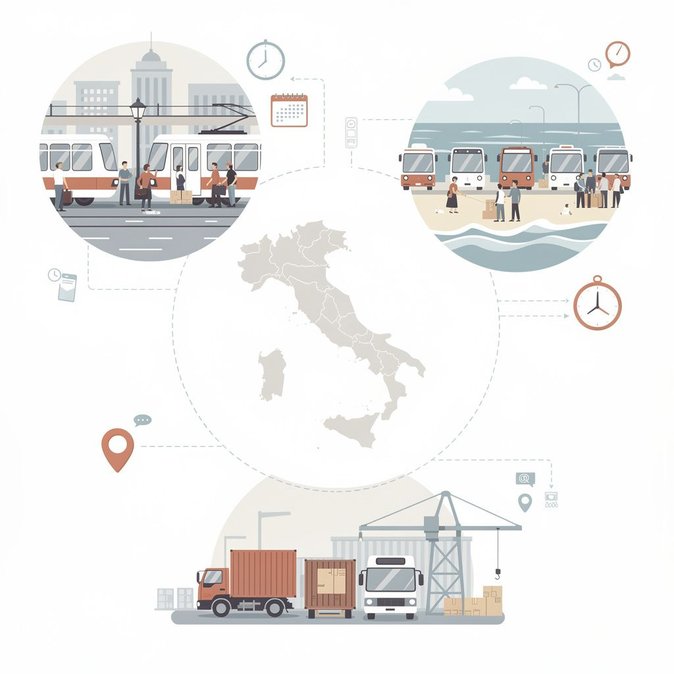
Italy’s fragmented public-transport landscape faced a day of rolling stoppages on 9 October, with five distinct labour actions logged by monitoring portal ScioperiItalia. The largest impact was felt in Lombardy, where two separate 24-hour strikes by AL-COBAS and CONFIAL Trasporti reduced ATM Milan metro and bus frequencies by up to 40 per cent during off-peak hours. Further south, Start Romagna staff serving the coastal cities of Forlì-Cesena, Rimini and Ravenna mounted twin 24-hour walk-outs, causing widespread cancellations of regional bus services that feed Rimini’s Federico Fellini Airport and the industrial zones of Ravenna’s port. Employers in the tourism and logistics sectors reported late arrivals and higher taxi claims as a result. In Calabria, the freight-hauling association Fedralog launched a 120-hour work stoppage running from 9 to 13 October. The action targets third-party trucking firms carrying port and agricultural cargo, forcing shippers at Gioia Tauro and Crotone ports to divert containers north by rail or accept delivery delays of 48-72 hours. While each strike stems from local grievances—ranging from overtime allocation in Milan to safety equipment shortages in Calabria—the coincidence of dates amplified the overall disruption nationwide. The Ministry of Infrastructure has called the unions to an extraordinary conciliation meeting next week, warning that repeated regional actions risk undermining Italy’s post-pandemic mobility recovery. Multinationals with Italian operations should revisit contingency plans. Options include flexible work-from-home policies on announced strike days, pre-booking taxis or car-shares for critical staff in Milan’s financial district, and shifting time-sensitive cargo to rail or short-sea feeder services during the Calabrian freight stoppage.
Source: ScioperiItalia