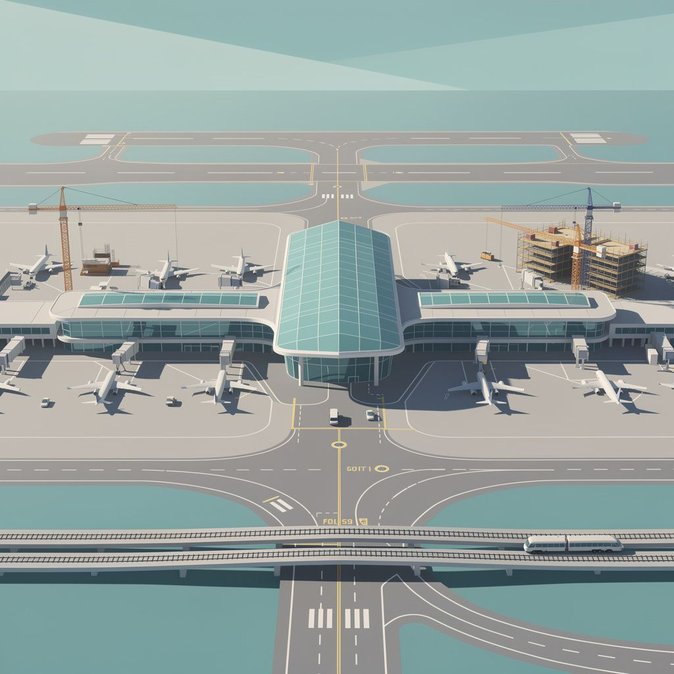
Birmingham Airport (BHX) has published a draft Master Plan proposing **£2 billion of phased investment** designed to almost double annual throughput from 16 million to 30 million passengers by 2040. Announced on 9 October 2026, the blueprint focuses on maximising the capacity of the existing single runway rather than building a second. Key projects in Phase 1 (starting 2027) include additional aircraft stands, a re-engineered baggage system, expanded security halls and revamped ground-transport interchanges. Management predicts the scheme will inject £3.6 billion into the West Midlands economy and support more than 50,000 jobs once complete. CEO Nick Barton called it “the largest investment programme in the airport’s history” and said securing a stable regulatory and tax framework would be critical to unlocking private finance. The airport has opened an eight-week public consultation featuring 20 community events. For corporate mobility teams the message is opportunity. A bigger BHX could relieve congestion at Heathrow and Manchester, offer additional long-haul options for Midlands-based staff, and shorten door-to-door journey times for many assignees. The plan also dovetails with HS2’s eventual arrival at the adjacent Interchange station, promising faster rail links to London and northern cities. Environmental groups will scrutinise the proposal’s carbon claims. Airport leadership says the design aligns with the UK’s Jet Zero strategy and incorporates future-proofing for hydrogen and sustainable-aviation-fuel infrastructure. Businesses engaged in scope-3 emissions reporting should watch how the final plan addresses net-zero targets before locking in travel-policy assumptions.
Source: Travelling for Business