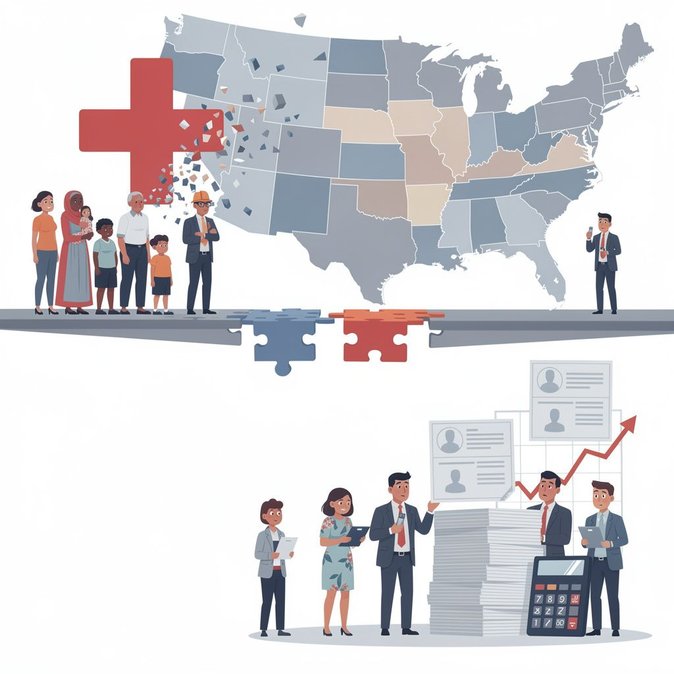
The U.S. Department of Health and Human Services has begun implementing a rule—first authorized under last year’s tax-and-policy law—that removes federal Medicaid funding for most refugees and other legally present immigrants who have been in the United States for fewer than five years. The change, which took effect on 1 October, is projected to push hundreds of thousands of low-income green-card holders, asylum-seekers, and children in mixed-status families off the rolls almost overnight. Although health policy may sound far afield from global mobility, the decision lands squarely on the desks of mobility managers and multinational employers. Many corporate relocation packages rely on state Medicaid programs as a bridge until employer coverage begins; without that safety net, companies will either have to accelerate private insurance enrollment or risk assignment delays for foreign workers who cannot afford out-of-pocket care. State governments—particularly those that host large tech and agricultural workforces—say they received fewer than 45 days’ notice to re-program eligibility systems. California estimates that 118,000 newly admitted permanent residents will lose coverage this quarter, while Texas projects an 11-percent spike in uncompensated-care costs for its county hospitals. Advocates for business immigration warn that the policy could further deter talent. “When an engineer weighing offers from Berlin or Boston sees that their prenatal care might vanish the moment they land, the U.S. loses competitive ground,” said Rebecca Shi of the American Business Immigration Coalition. Several Fortune 500 employers told AP they are already budgeting for interim private plans that can run $800 a month per adult. Legal challenges are expected, but because Medicaid is considered a discretionary benefit for non-citizens, constitutional arguments are narrow. Unless a court grants an injunction, global mobility teams should prepare contingency health-care budgets, audit state-by-state eligibility rules, and communicate proactively with assignees arriving after 1 October.
Source: Associated Press