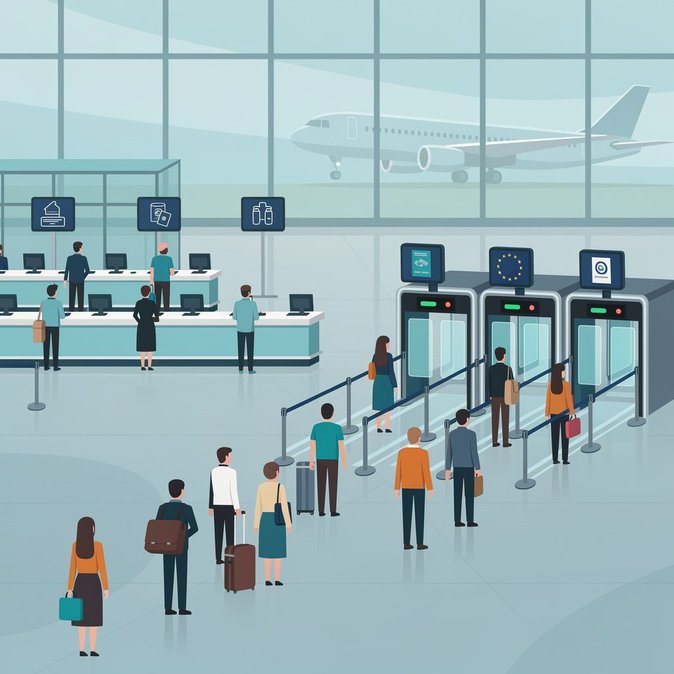
Belgium’s main international gateway is spending again to fix a Europe-wide border-control headache. In a press release issued on 23 October, Brussels Airport Company said it will install eight extra manual passport-control positions in the arrivals hall before the December holiday rush and will deploy six additional automated e-gates in early 2027. The move follows “persistent problems” with the EU’s new Entry-Exit System (EES), which has doubled or tripled processing times for non-EU passengers by requiring the capture of fingerprints and facial images. EES officially went live at Belgian airports late last year. Despite earlier investments—manual booths were already up 25 % at departures and 20 % at arrivals—the airport reports that morning-peak queues for third-country nationals routinely stretch beyond two hours. September saw wait times rise again after a brief August respite, leading to renewed complaints from airlines and business travellers. The airport is lobbying, with ACI Europe and Airlines for Europe, for EU-level fixes such as a pan-European pre-registration app and the option to suspend biometric collection during extreme congestion. Only Sweden and Portugal currently offer such an app. Until then, the Zaventem hub is betting on bricks-and-mortar capacity and closer coordination with the Federal Police to keep queues manageable. For corporate mobility managers the announcement is a heads-up: arrival formalities for assignees and visitors will remain slower than the pre-EES norm throughout the winter season. Companies should warn travellers to allow extra time when scheduling tight rail or onward flight connections and to make sure passports meet fingerprint-scanning standards. The new booths will double manual capacity on arrivals, but the real productivity gain will only come once the delayed e-gates and EU-wide IT fixes are in place.
Source: Brussels Airport pressroom