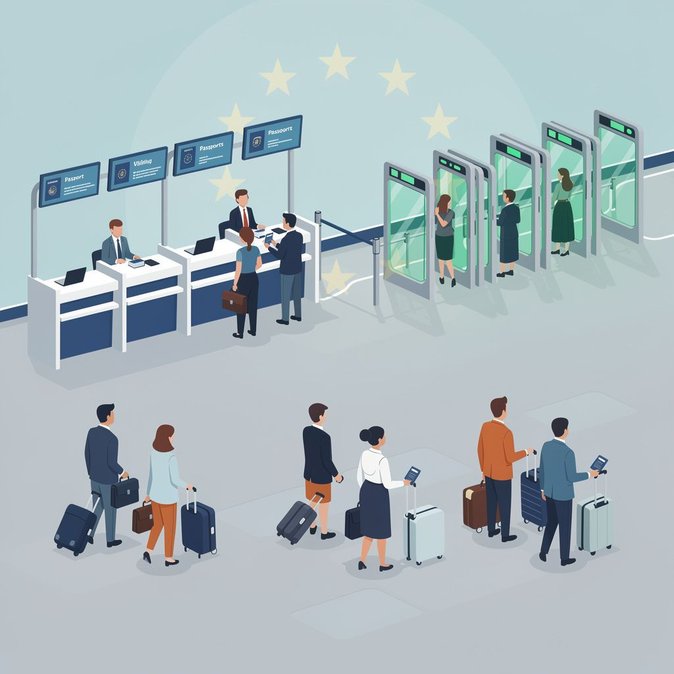
Brussels Airport confirmed on Friday, 23 October 2026, that it will add eight staffed passport-control booths in December and install six extra e-gates early next year to deal with mounting queues caused by the EU Entry/Exit System (EES). Non-EU passengers arriving during the morning peak now wait up to three hours—three times longer than before the biometric system went live—forcing some travellers to miss onward rail or connecting flights. The EES, fully rolled out across the Schengen Area in April, replaces manual stamping with facial-image and fingerprint scans, producing a single automated record of each traveller’s time spent in Europe. While touted as a security upgrade, the change has created choke points at major hubs such as Brussels, Amsterdam and Paris because the biometric kiosks require more interaction, and software glitches have periodically taken machines offline. Airlines, airport operators and the European Commission have blamed each other for an implementation they admit was “under-resourced for 2026 volumes.” Brussels Airport says the extra positions will raise arrival-hall capacity by 66 percent, reducing average waits to under 30 minutes once staff are fully trained. The airport is also lobbying the Federal Police and the Interior Ministry for a mobile pre-registration app—similar to tools already live in Portugal and Sweden—that would allow travellers to submit fingerprints and a selfie before landing. Business associations such as VOKA and AmCham Belgium argue that predictable border processing is critical for the investment climate; several multinationals have complained that executives are losing billable hours in immigration lines. For corporate mobility managers the advice is clear: schedule at least 90 minutes between landing and onward ground transport, and encourage non-EU assignees to travel hand-luggage-only until the system stabilises. Companies placing staff in Belgium for short projects should also monitor the 90-in-180-day Schengen rule now calculated automatically by EES—overstays will trigger automated alerts and possible entry bans. The airport’s next capacity review is planned for March 2027, when the e-gate fleet will double to 24 units.
Source: Brussels Airport pressroom