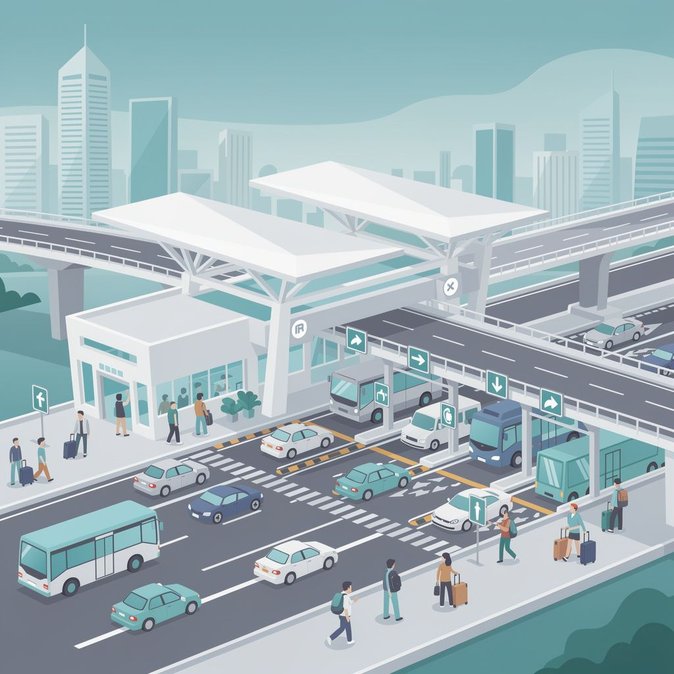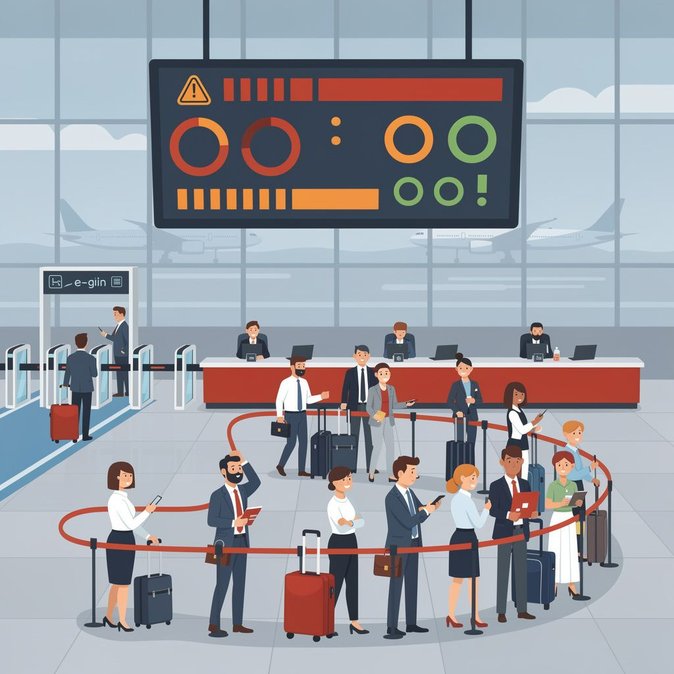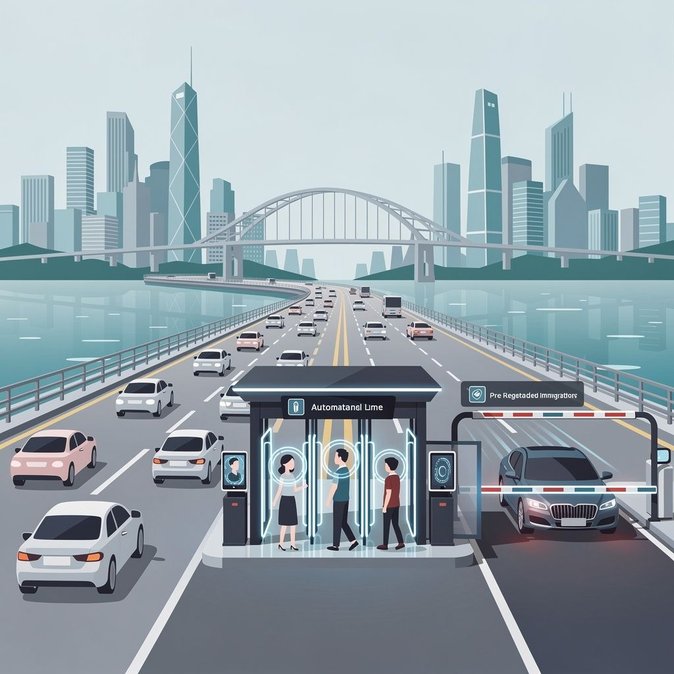
Hong Kong’s Immigration Department says the pilot “Seamless e-Channel” facial-recognition gates installed at the Hong Kong-Zhuhai-Macao Bridge (HZMB) departure hall in June have already signed up more than 79,000 permanent-resident users and processed over 200,000 passenger trips. In a written reply to the Legislative Council on 11 November, Secretary for Security Tang Ping-keung called the take-up rate—nearly 80 % of those eligible—an important proof-of-concept for the city’s push toward fully automated boundary clearance. Building on that success, the department will extend the self-service gates to the HZMB arrival hall and, subject to operational data, to other checkpoints such as the West Kowloon high-speed-rail terminus. Just as significant is a newly announced “Automated Transportation On-board Clearance System Pilot Scheme,” due to start at HZMB in December 2026. Using multiple in-car cameras and high-speed AI matching, the system will verify the faces of pre-registered drivers and passengers without anyone leaving their seats. Officials expect average vehicle-clearance times to fall from around two minutes to just 20 seconds. Hong Kong and Shenzhen are also studying wider adoption of collaborative inspection and joint-clearance models as part of the “East in East out, West in West out” strategy to balance flows across the Greater Bay Area. The government stresses that any conversion of existing control points will require careful redesign of layouts, traffic approaches and staffing to avoid disrupting daily operations. For multinational companies that rely on same-day cross-boundary travel—especially those moving goods between PRD factories and Hong Kong’s logistics hub—the combination of biometric fast-track lanes for people and upcoming in-car clearance for vehicles could shave hours off peak-period waits and reduce driver overtime. Employers should encourage frequent travellers to enrol in Seamless e-Channel early and monitor registration windows for the on-board scheme, which will initially be limited to Hong Kong permanent-resident private-car permit holders aged 11 and above. The bigger picture is that Hong Kong is positioning itself as a regional test-bed for technology-driven immigration facilitation, something the city hopes will reinforce its role as the preferred gateway to mainland China for business travellers and high-value cargo.