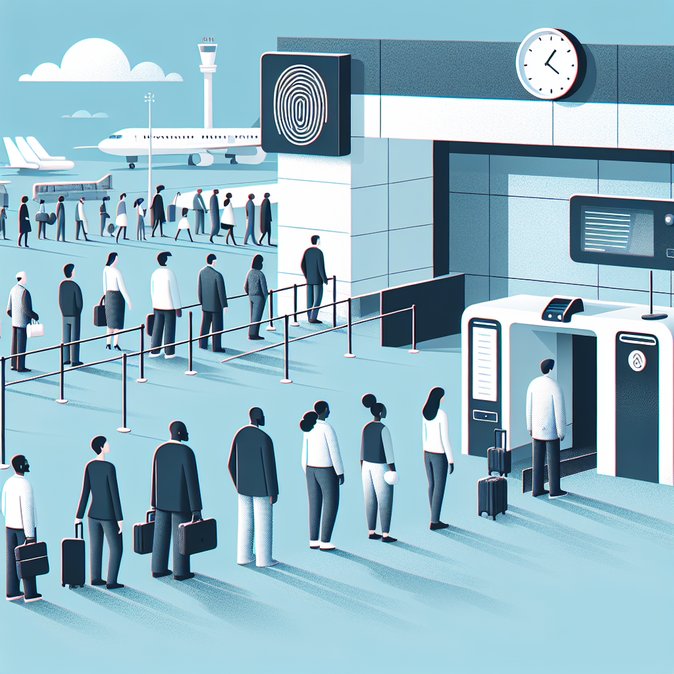
Less than two weeks after the European Union’s Entry/Exit System (EES) became fully mandatory, passengers landing at Paris-Charles-de-Gaulle are grappling with waits that frequently top two hours. A report published on 20 April 2026 by travel-law portal Nomad Lawyer cites airport-authority data showing that the afternoon arrival ‘bank’ at Terminal 2E is most affected, with biometric kiosks processing around 35 % fewer travellers per hour than forecast. The congestion comes as border-police officers check newcomers’ fingerprints and facial images while manually scanning passports into the new database. Although some travellers breeze through the PARAFE e-gates, third-country nationals—including British business visitors and U.S. executives—must undergo the full EES enrolment on first entry, creating a bottleneck at peak times. Airlines for Europe (A4E) and ACI EUROPE have issued a joint letter urging member states to use the regulation’s ‘exception’ clauses more liberally when queues exceed 60 minutes. For corporate mobility programmes the delays have immediate consequences: same-day connections booked under the traditional 90-minute minimum are now risky, and travellers with priority security may still miss onward flights. Several multinationals told Nomad Lawyer they are instructing staff to schedule meetings after 12:00 the day after arrival, or to route via Amsterdam and Frankfurt, where extra staff have been drafted in. Travel-management companies are likewise re-programming booking tools to flag tight connections through Paris. French authorities say the bottleneck is a ‘settling-in’ issue and that additional mobile kiosks will be deployed before the Pentecost rush. But unions representing border officers have warned that staffing levels remain below the pre-pandemic baseline. If no relief is found, summer holiday peaks could see three-hour queues similar to those reported at Spanish airports last week. Industry groups are therefore pushing for a summer-long option to suspend biometrics temporarily during critical peaks, an idea Paris has not ruled out. In the meantime, global-mobility managers should brief employees to allow at least three hours between scheduled landing and any onward domestic or rail segment, and to keep proof of business purpose handy; anecdotal accounts suggest officers are scrutinising supporting documents more closely as they adjust to the dual-system workload. VIP meet-and-assist services report a 40 % surge in bookings since 11 April, underlining the commercial impact of the new regime.
Source: Nomad Lawyer