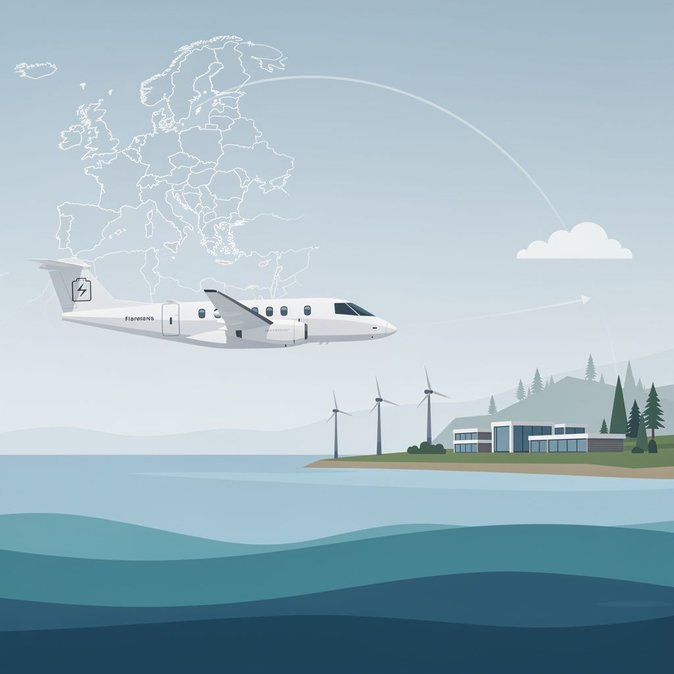
A two-seat Elektra Trainer electric aircraft landed at Vaasa Airport on Finland’s west coast on 8 July after a 125-kilometre hop over the Gulf of Bothnia from Umeå, Sweden—marking the first time a fully certified electric airplane has flown across open sea to Finland. The flight is part of the 5,600-kilometre “North Circuit 2026” tour organised by Oulu University of Applied Sciences (Oamk) and German manufacturer Elektra Solar to demonstrate the real-world endurance of battery-powered aviation in northern conditions. Powered by a dual-redundant 35-kW electric drive and wing-integrated solar panels, the aircraft consumes less than half the energy of a petrol-engined trainer of similar weight. Test pilot Uwe Nortmann said the sea crossing was “smooth and faster than expected,” despite a lightning-related charging-system repair earlier in Sweden. After stops in Seinäjoki, Oulu and Kuhmo—where the aircraft will headline the annual Fly-In—the tour will continue via Estonia and the Baltic states back to Germany, using Type-2 car chargers and portable generators where airport infrastructure is lacking. The demonstration is more than a stunt. Oamk has purchased its own Elektra Trainer for research on cold-weather battery performance, charging logistics and the potential to revive lightly used regional airstrips. Finnish regional-development agencies see electric short-haul aircraft (15–20 seats by the early 2030s) as a way to restore direct links between secondary cities, cut surface-travel times for business travellers, and reduce carbon emissions in a country where 80 percent of domestic flights are under 500 kilometres. Finland’s transport ministry is mapping potential electric-aviation routes in Lapland and the Kvarken region, with EU funding earmarked for megawatt-class chargers. For corporate mobility planners, the arrival of certified electric aircraft signals an emerging low-emission option for regional travel that could complement rail and conventional turboprops on high-frequency routes such as Helsinki–Tampere or Oulu–Luleå. While passenger services are still several years away, companies with net-zero travel targets should monitor infrastructure roll-outs at secondary Finnish airports and consider early partnerships with operators piloting electric charter services. Airport authorities, meanwhile, will need to adapt ground-handling contracts, energy-supply agreements and safety procedures to accommodate battery charging and fire-suppression requirements. Cross-border implications are equally significant. Sweden’s heart-of-commerce Umeå–Vaasa corridor could become Europe’s first regular international electric air link, building on the Kvarken Council’s existing ferry-based logistics network. As other Nordic and Baltic countries test similar aircraft, a mesh of short-haul zero-emission flights could reshape business-travel itineraries around the northern Baltic by the early 2030s.
Source: Yle News