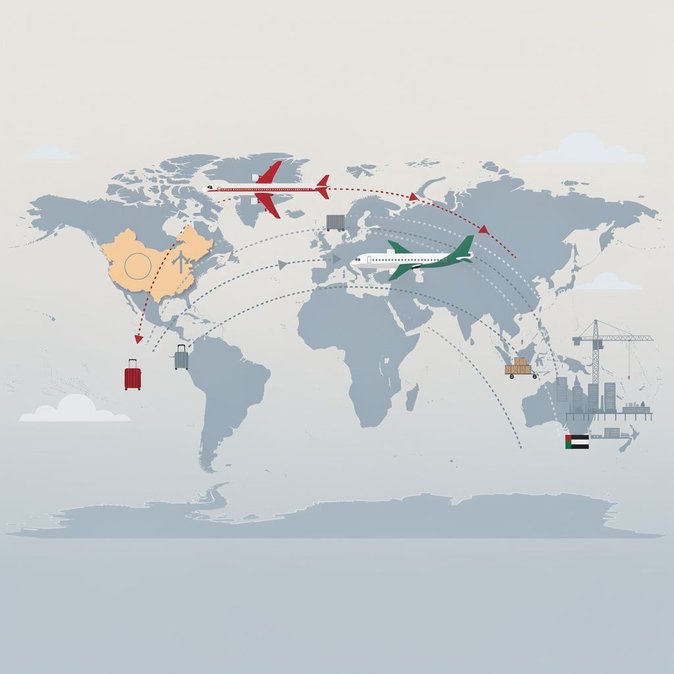
During a 17 September meeting in Beijing, Civil Aviation Administration of China (CAAC) Vice-Administrator Liang Nan and UAE General Civil Aviation Authority Assistant Director-General Yousef Hashim Aziz agreed to accelerate negotiations on additional air-service rights between the two countries. While current bilateral capacity has almost returned to pre-pandemic levels, both sides see unmet demand for cargo and premium business travel. According to CAAC statistics, Chinese passenger traffic to the Gulf has recovered to 92 % of 2019 levels, driven by resurgent energy, construction and retail ties. UAE carriers are lobbying for more third-country traffic rights that would let them carry passengers onward to Europe on a single ticket, while Chinese airlines want additional slots at Dubai World Central to support e-commerce shipments. Liang said Beijing supports “mutually beneficial route expansion” provided safety and reciprocity are assured. The two regulators will establish a joint working group to finalise new frequencies and code-share approvals before the winter-schedule deadline on 29 October. Travel-trade insiders expect at least five extra weekly services each for Emirates and Etihad, plus new nonstop flights from Chengdu and Wuhan. For corporate mobility planners the prospect of more nonstop options means shorter door-to-door times and potentially lower fares on China–Middle East–Africa corridors. It also signals China’s broader effort to deepen economic links with Gulf Cooperation Council members through enhanced people-to-people connectivity.