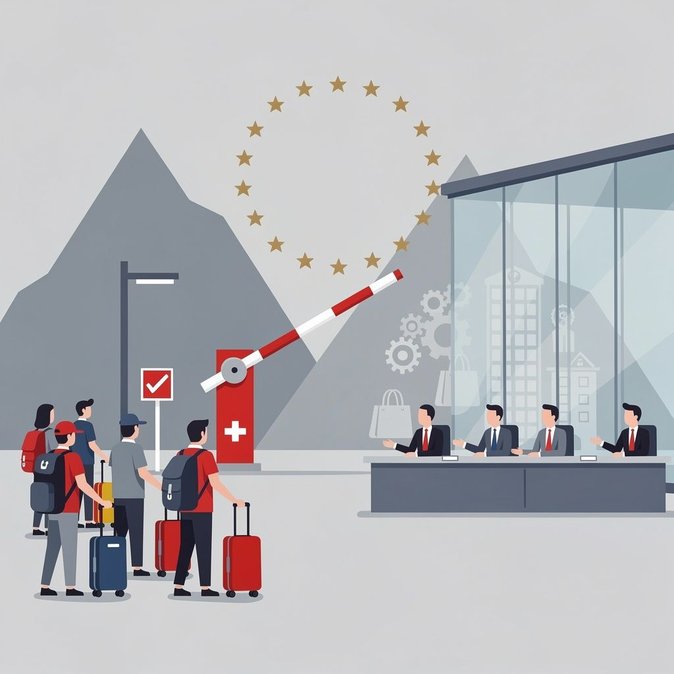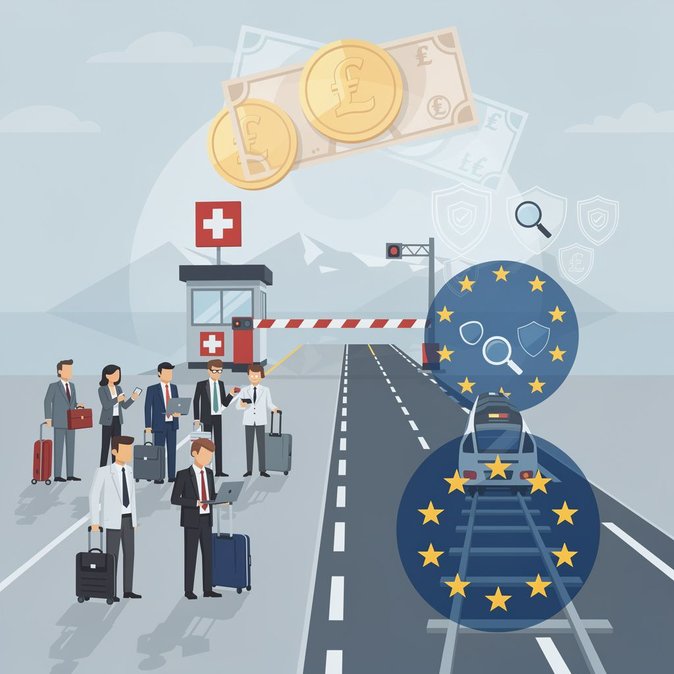
At its meeting of 18 September 2026, the Swiss Federal Council formally recommended that Parliament and, ultimately, voters reject the popular initiative “Stop asylum abuse! (Border-Protection Initiative).” The proposal, brought forward by supporters of the right-wing Swiss People’s Party, would mandate systematic identity checks on everyone entering Switzerland and cap approvals of asylum applications at 5,000 per year. In its message to Parliament, the government argues that such a regime would be virtually impossible to implement without massive financial and human-resource outlays. More than 2.2 million crossings occur daily at Swiss borders, many involving cross-border commuters who keep regional labour markets functioning. Permanent checks would create queues stretching for kilometres, crippling just-in-time supply chains, tourist flows and daily business travel in border cantons such as Ticino and Basel. The Federal Council’s impact report estimates annual losses of CHF 5.8 billion to CHF 16.1 billion if Switzerland were ejected from the Schengen/Dublin system. Beyond the economic hit, Bern warns that withdrawal would weaken internal security: Switzerland would lose real-time access to European police databases and have to re-examine all Dublin asylum transfers on its own. The government stresses that today’s risk-based, mobile customs checks already allow for targeted enforcement while preserving fluid movement for legitimate travellers and goods. From a corporate-mobility perspective, the initiative would jeopardise short-notice travel for multinational staff, disrupt supply chains dependent on “frontaliers” from neighbouring EU states and deter foreign investors who prize Switzerland’s seamless connection to the EU market. Companies would also face higher compliance costs as they arrange for residence permits and border documentation for staff previously able to move freely. The dossier now heads to Parliament. Unless backers withdraw the initiative, a nationwide vote must be held within the next three years. Mobility managers should monitor the parliamentary debate and prepare contingency plans—especially in transport, life-sciences and manufacturing clusters close to the frontier—should the referendum take place.