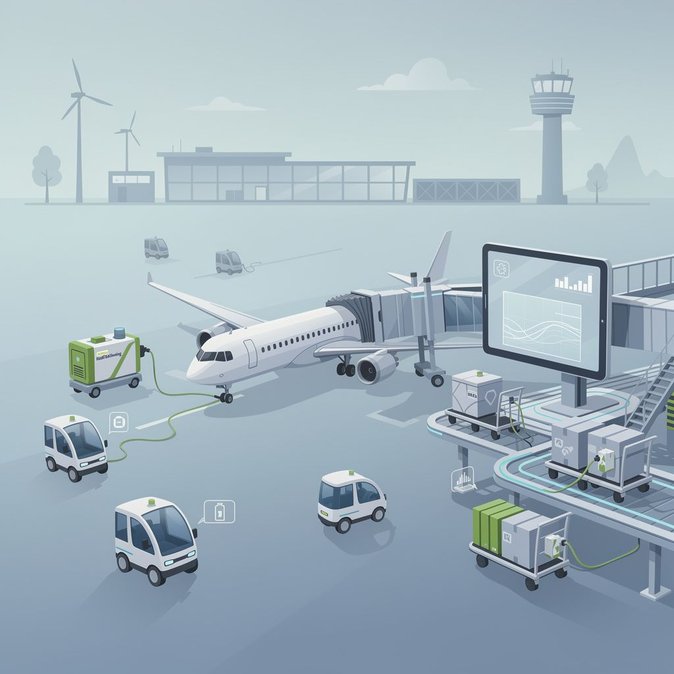
Brussels Airport on 23 September unveiled the five-year results of “Stargate”, a €25-million Horizon 2020 demonstration that has quietly transformed the way aircraft, cargo and passengers move through Belgium’s primary gateway. Working with 22 partners—including Brussels Airlines, DHL Aviation, TUI and skeyes—the airport tested more than 30 innovations aimed at cutting carbon, noise and congestion. Among the headline achievements is a wholesale shift to electric—and in some cases hydrogen-powered—ground-handling equipment. Electric fuel dispensers and baggage tractors now form part of daily operations, slashing CO₂ emissions and ultrafine particles on the apron. The airport has also become the first in Europe to pilot a mobile blending facility for on-site production of Sustainable Aviation Fuel (SAF), allowing airlines to top up to higher SAF ratios on demand. Cargo flows have been digitised through the “Digital Green Lane”, with 95 % of shipments processed paper-free, reducing truck dwell times and paperwork for freight forwarders. On the landside, a modal-shift plan—including new cycle paths, shared-bike schemes and a feasibility study for high-speed rail links—has already pushed commuter cycling to the airport up 7 % this year. Why does this matter for global mobility? Multinationals basing staff in Brussels gain a first-mover advantage from smoother, lower-carbon ground handling that can shave minutes off tight connections and improve corporate sustainability scores. Freight shippers, particularly in life-sciences and tech, benefit from faster turnaround times and better air-quality compliance for temperature-sensitive goods. The SAF blending pilot also offers airlines serving EU institutions an immediate pathway to meet soon-to-rise ReFuelEU quotas without complex supply-chain changes. Airport management confirmed that many Stargate pilots—such as the electric Taxibot that tows aircraft engine-off—will be rolled out permanently and shared with Athens, Budapest and Toulouse, positioning Brussels as a regional test-bed for next-generation airport mobility.
Source: Brussels Airport Pressroom