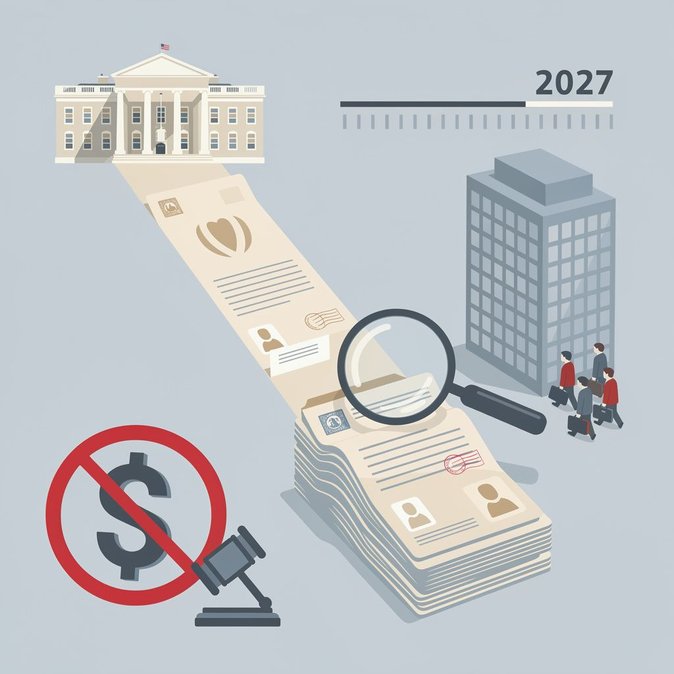
In twin actions announced September 18 and analysed by Klasko Immigration on September 23, President Trump extended for one year the 2025 proclamation that conditions entry of new H-1B workers on a US$100,000 payment and signed an executive order directing inter-agency scrutiny of employers that have conducted recent layoffs. The extension pushes the proclamation’s expiration to September 21, 2027, signalling the Administration’s intent to keep the punitive fee alive even as litigation rages. The catch: a June 8 district-court decision vacated the fee’s implementing guidance, and the First Circuit refused to stay that ruling. Consequently, USCIS and U.S. consulates are not currently collecting the payment. The White House extension therefore has more political than practical effect—at least until higher courts weigh in. Still, the proclamation’s survival keeps uncertainty in the system. Global employers planning overseas hires must assume the fee could snap back if the government prevails on appeal. Meanwhile, the new executive order instructs DHS, DOL and State to cross-reference layoff data when adjudicating H-1B petitions, foreshadowing heightened RFEs and site visits for companies that have reduced U.S. headcount. Mobility teams should audit recent workforce changes, ensure labour-condition applications reflect current wage data and prepare budget contingencies in case either the US$100k fee or the newly proposed US$103k fee (see separate article) becomes payable. Given overlapping rules, the real compliance cost may be less about the cheque and more about the internal time required to track evolving obligations.
Source: Klasko Immigration Law Partners