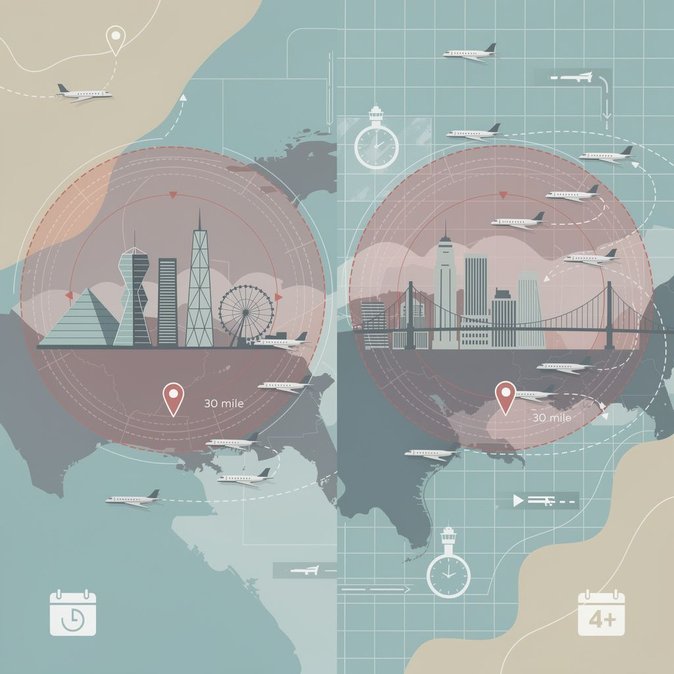
The Federal Aviation Administration’s Air Traffic Control System Command Center imposed a traffic-management program (TMP) on jets bound for Las Vegas (LAS) beginning 16:30 UTC on September 25 and running until 05:00 UTC on September 26, citing staffing constraints across four adjacent air-route traffic control centers. Under the initiative, departure slots from Denver, Salt Lake City, Oakland and Albuquerque centers were metered at reduced rates, generating average delays of 53 minutes for corporate jets and scheduled carriers alike. The restrictions hit just as 30,000 delegates were arriving for a global cybersecurity expo at the Las Vegas Convention Center, forcing exhibitors to re-route via Phoenix or Southern California and then drive. For mobility managers, the episode underscores the importance of contingency routing even when weather is clear. Because the TMP was staffing-related, airlines could not invoke force-majeure clauses to avoid passenger compensation under U.S. DOT rules—a nuance travel buyers should flag when negotiating waivers. The FAA says the staffing shortfall stems from a COVID-era hiring freeze whose ripple effects are still being felt; roughly 16 percent of ZLA (Los Angeles Center) controllers remain in training status. Industry groups are pushing for an FY 2027 appropriations rider that would lift the cap on overtime hours, a move supported by the U.S. Chamber of Commerce, which estimates that every hour of Las Vegas arrival delays costs businesses $2 million in lost productivity. With major events such as the Formula 1 Grand Prix returning in November, charter operators should file slot requests early and build 90-minute buffers into schedules. Companies flying time-critical cargo should consider routing via Reno or Ontario, where ground-haul times are predictable even under TMP conditions.
Source: FAA Current Restrictions Feed