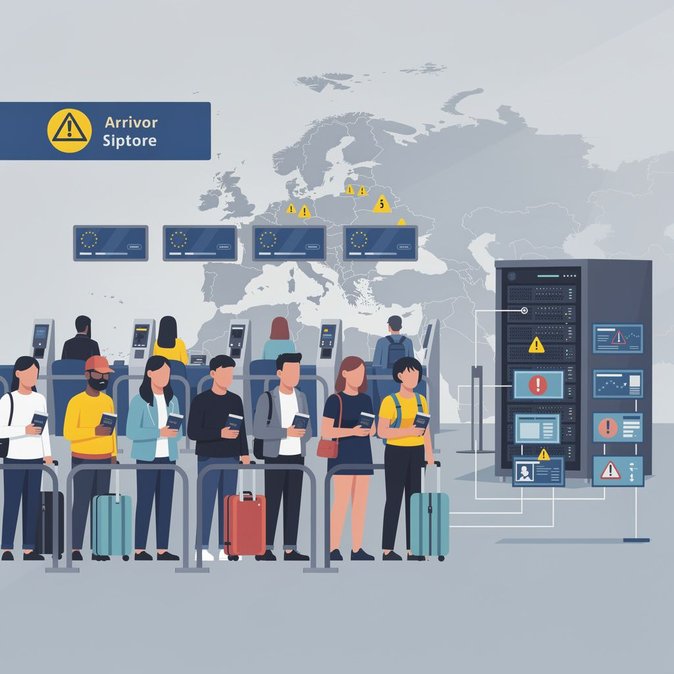
Brussels Airport is once again the test case for Europe’s new Entry/Exit System (EES) – and not in the way policymakers had hoped. On Monday, 28 September, arriving passengers from outside the Schengen Area reported queues of up to five hours at passport control after repeated IT failures crippled the biometric registration gates. Airport management confirmed that the backlog was entirely linked to the EU-wide EES, which became mandatory at all external Schengen borders in April 2026. The system records facial images, fingerprints and travel document data for every non-EU traveller. In theory it replaces the manual stamping of passports and should speed up border formalities while detecting overstays. In practice, a combination of unstable software, hardware outages and limits on which nationalities may use the automated kiosks has created dramatic bottlenecks at Brussels. Industry bodies including IATA and ACI-Europe have warned the Commission for months that airports need the legal option to suspend EES temporarily when queues exceed two hours; Monday’s scenes will intensify that pressure. Beyond passenger frustration, the disruption has financial and reputational costs for carriers and companies with time-critical operations in Belgium. Airlines must re-book missed connections, OTAs and corporate travel managers face service-level penalties and employers of mobile talent risk lost productivity. Multinationals moving staff through Brussels should build in longer connection windows, pre-register travellers where possible and monitor contingency guidance from border police (PaF) and the Interior Ministry. Airport authorities say 33 e-gates and 61 self-service kiosks have already been installed, but more staffing at manually staffed booths is now unavoidable. The federal government is reportedly examining a phased fallback plan that would allow officers to switch selected flights back to traditional stamping during peak traffic. For the wider Schengen Area, the episode underscores how a security-driven reform can become a mobility chokepoint if implementation is rushed. With winter holiday traffic only weeks away and the ETIAS travel authorisation scheduled for mid-2027, resolving Brussels’ EES woes is fast becoming a continental priority.
Source: Travel Tomorrow