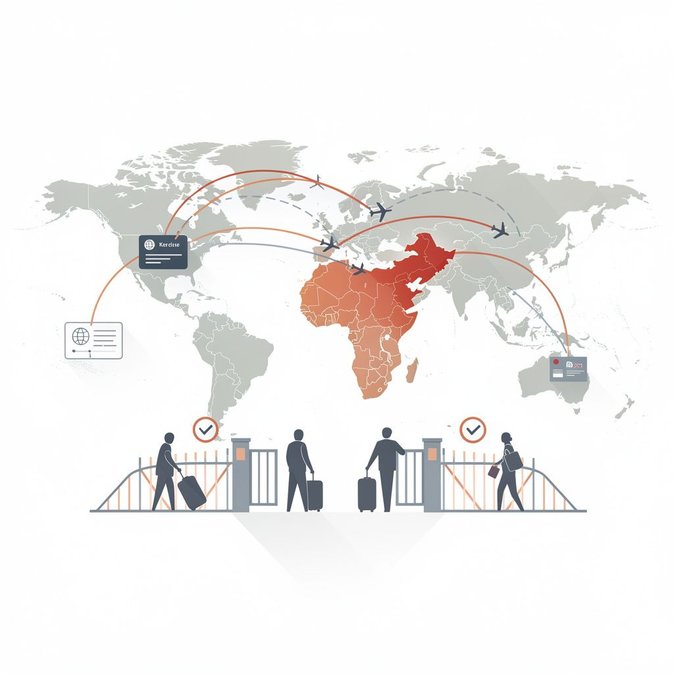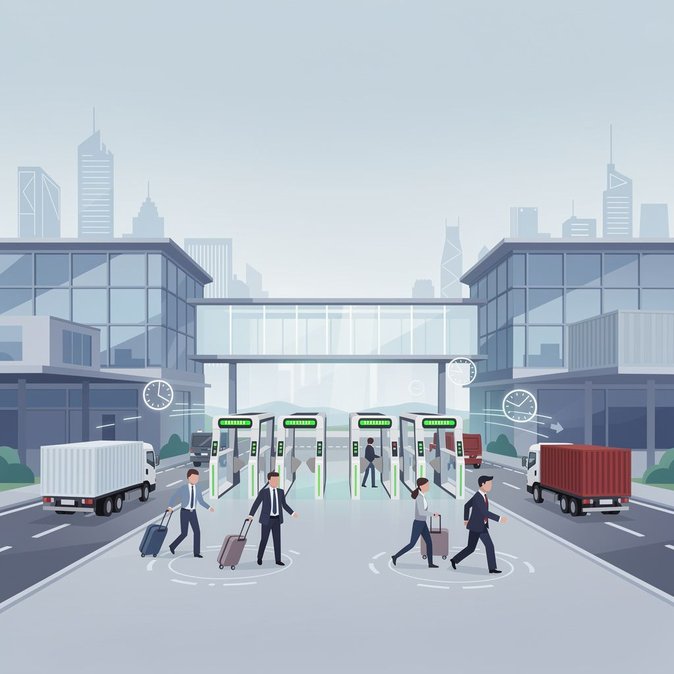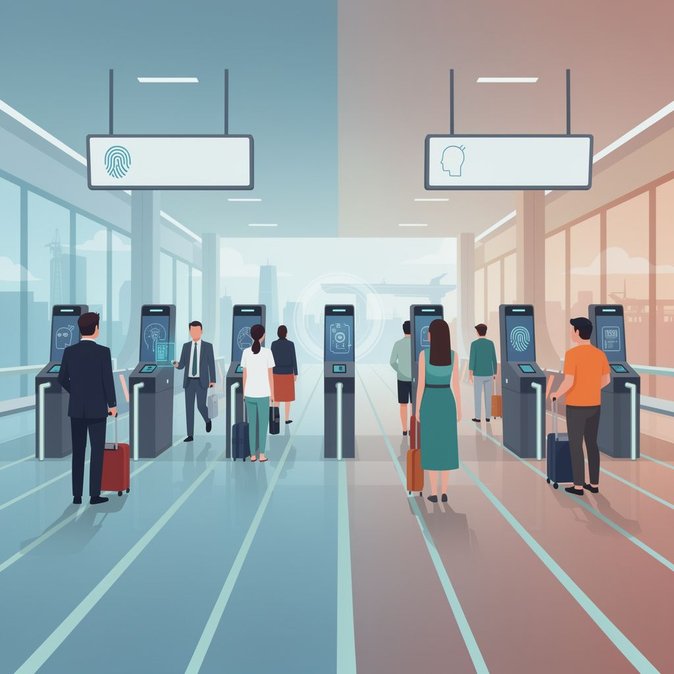
Hong Kong and Shenzhen will switch on their first automated ‘joint clearance’ border channels at the overhauled Huanggang Port on 12 October, officials confirmed late on 6 October. The system requires travellers to complete a one-time biometric registration on both sides of the boundary. Once enrolled, passengers present a single identity document—home-return permit for mainland residents, home-visit permit or passport for Hong Kong residents—and walk through a three-gate e-channel that bundles exit and entry checks into one seamless procedure. Assistant Director of Hong Kong’s Immigration Department Jacky Wong Ki said the registration process “takes only a few seconds” and pledged extra staffing during the roll-out phase. Authorities expect the revamped land crossing to process around 100,000 people per day, a volume comparable with pre-pandemic highs. The port upgrade also features facial-recognition turnstiles, self-service declaration kiosks and an integrated customs information system that shares risk alerts in real time between Hong Kong and mainland databases. The project is a test case for the Greater Bay Area’s drive to cut clearance times and boost cross-border labour mobility. Business chambers have long argued that faster checkpoints are essential if the region’s 86-million population is to function as a single market for talent. For employers, the new lanes mean commuters based in Shenzhen’s tech parks can reach meetings in Kowloon within an hour door-to-door, while Hong Kong-based executives can attend morning briefings in Futian and still be back at the office before lunch. Legal advisers note, however, that joint-clearance does not alter underlying visa requirements. Mainland Chinese still need valid exit endorsements to visit Hong Kong, and foreign passport holders must carry multiple-entry visas or visa waivers accepted by both jurisdictions. Companies should therefore review staff documentation and begin the dual-side pre-registration early to avoid first-week congestion. If the pilot proves successful, officials aim to replicate the model at other high-volume crossings such as Shenzhen Bay and the West Kowloon high-speed rail terminus. Longer term, full mutual recognition of e-gates could allow genuine ‘one-stop’ checks using a single database—a step that would place the Greater Bay Area on par with the Schengen Zone in terms of cross-boundary efficiency.
Source: South China Morning Post