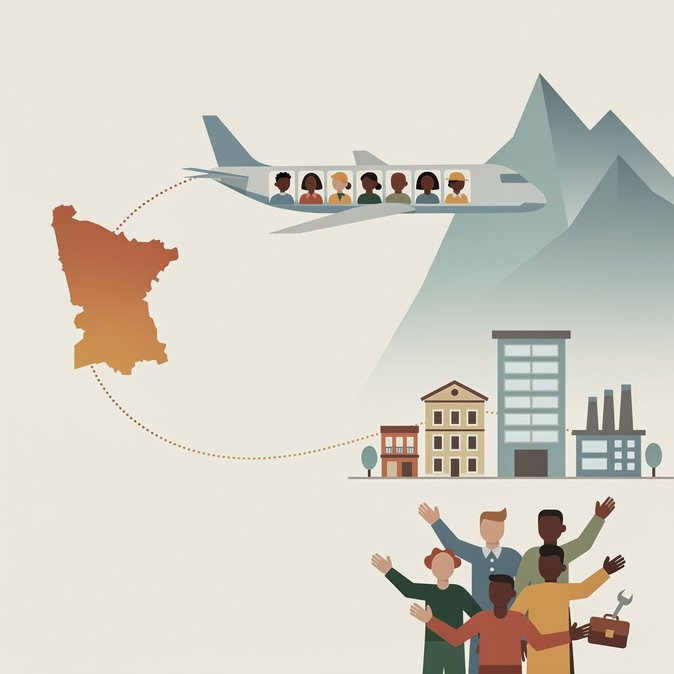
Local training provider IAL Lombardia and trade-union affiliates CISL and ANOLF unveiled the ‘Teranga’ project in Sondrio on 9 October. The initiative will recruit eight Senegalese nationals—aged 23 to 36—for one-year contracts in the Valtellina food-processing and light-engineering sectors. What makes the scheme novel is its two-phase design: participants complete Italian-language, technical-lexicon and health-and-safety modules in Dakar before travelling, then receive job-specific upskilling and housing support once in Lombardy. The pilot is financed through Fondimpresa’s 2024 call for proposals and dovetails with the national government’s plan to shift towards employer-led pathways rather than emergency regularisations. By front-loading training in the country of origin, organisers hope to reduce drop-out rates and ensure smoother social integration—a frequent pain-point for provincial businesses that struggle to attract talent. Companies involved include a cheese cooperative, a precision-metal workshop and a sustainable-tourism start-up. All have committed to mentoring and to paying wages in line with the metal-mechanical provincial contract. If the pilot succeeds, Lombardy’s regional council has signalled willingness to recognise the model under its ‘Work & Stay’ programme, potentially unlocking fast-track nulla osta (clearances) for future cohorts. For global mobility professionals the lesson is that Italian regions are experimenting with micro-schemes that could complement the national Flussi quota—especially important given 2027 caps are likely to tighten. Multinationals with satellite plants in northern Italy may be able to piggy-back on such projects or replicate the template with other origin countries. The name ‘Teranga’, Wolof for ‘welcome’, underscores the initiative’s soft-power dimension: organisers emphasise that early cultural orientation helps both sides meet ESG targets by improving retention and community relations.
Source: Il Giorno