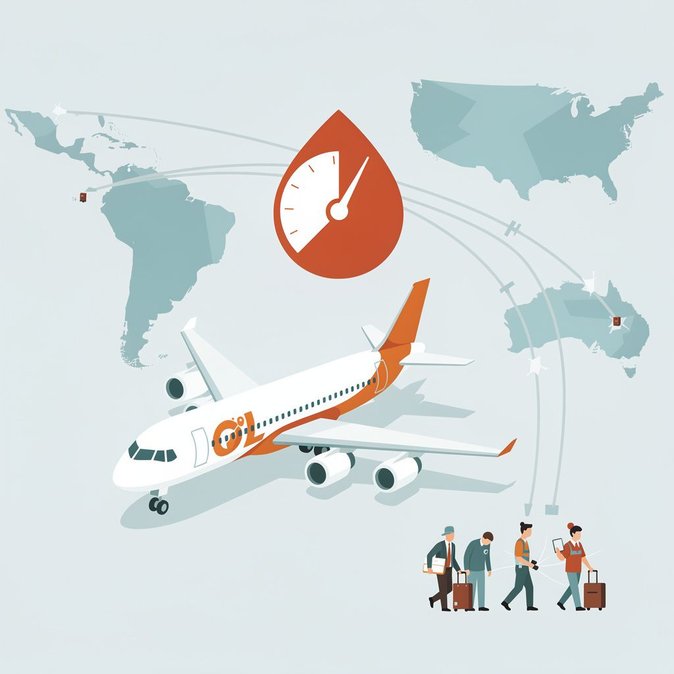
Brazil’s second-largest carrier, GOL Linhas Aéreas, announced on 14 October that it will suspend 11 international and domestic routes and offer a voluntary unpaid-leave scheme to employees as jet-fuel costs hit record levels. Routes axed include Brasília–Miami, Fortaleza–Orlando, São Paulo/Guarulhos–Punta Cana and Rio de Janeiro/Galeão–Montevideo. Several domestic links such as Congonhas–Ribeirão Preto and Salvador–Aracaju are also being cut. According to GOL, the price of aviation kerosene (QAV) has doubled in 12 months and now represents about 40 % of the airline’s operating costs. The company said it will keep a single US service—Galeão–New York—using wet-leased Airbus A330s until its own Boeing 787-9s arrive in late 2027. Passengers booked on cancelled flights will be re-accommodated on partner airlines under codeshare and interline agreements or will receive full refunds. The voluntary-leave programme is open to cabin crew, ground staff and corporate employees and may last up to six months, preserving jobs while cutting payroll costs. Trade-union leaders have called for government relief through a temporary reduction in QAV taxes, but the Ministry of Finance signalled that fiscal room is limited. For corporate travel planners, the network reduction reduces nonstop options to key business destinations in the United States, Uruguay and the Dominican Republic, potentially increasing travel times and costs. Companies with negotiated fares on GOL should monitor flight changes closely and consider backup block-space agreements with competing carriers such as LATAM and Azul. The decision underscores the vulnerability of Brazil’s aviation market to global energy shocks. With the summer peak approaching, capacity constraints could lead to higher fares and lower availability, challenging budgets for mobility and assignment managers.
Source: CNN Brasil