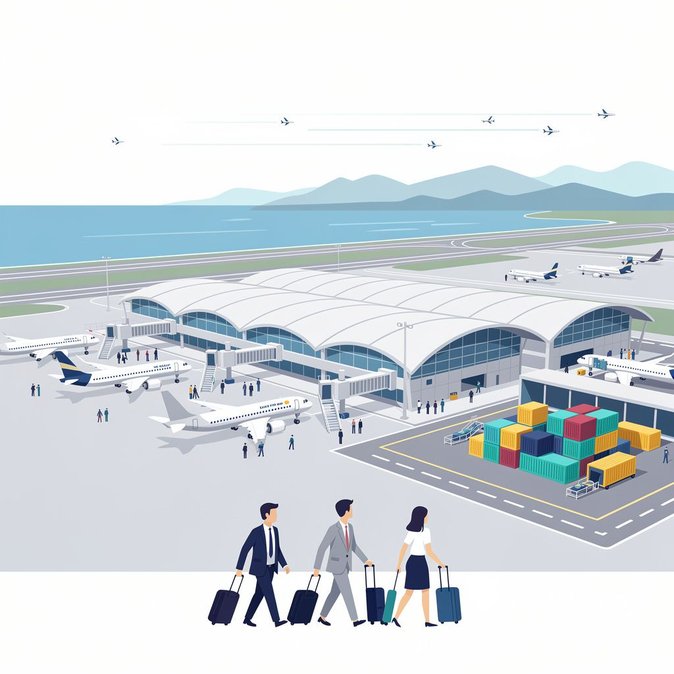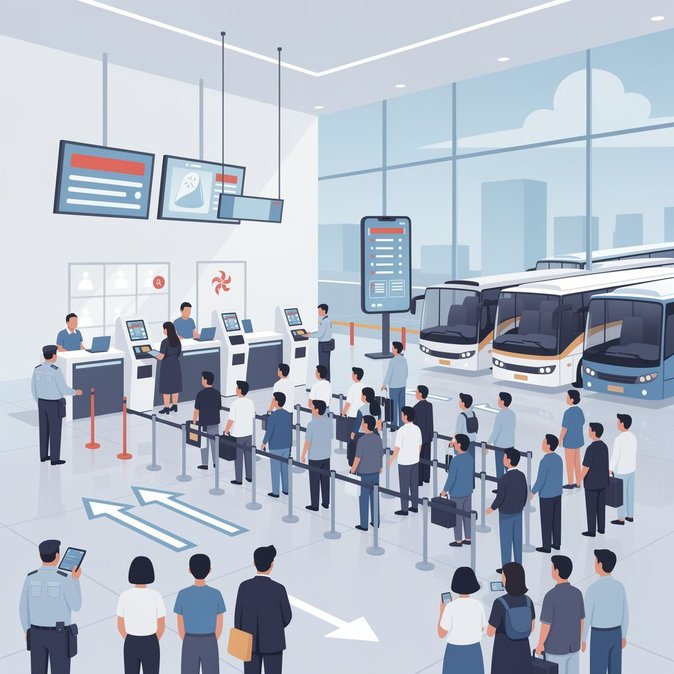
Hong Kong’s newest land border facility, the redeveloped Huanggang Port, was put to an unexpected stress-test on Monday afternoon when southbound traffic surged far beyond initial forecasts. Immigration Department figures show that 9,401 people entered the city between 2 p.m. and 4 p.m. on 19 October—an eye-popping 366 per cent jump compared with the same time band at the former Huanggang/Lok Ma Chau crossing. The spike followed the conclusion of the Chung Yeung Festival long weekend and was amplified by curiosity-driven travellers keen to experience the port’s new “collaborative inspection” e-channels, which allow one-stop clearance by Hong Kong and Mainland officers. To prevent bottlenecks, all arrival counters on L4 were opened and police officers were drafted in to steer queues to overflow areas on L2. The Transport Department placed 120 franchised buses, 40 green minibuses and 130 cross-boundary coaches on standby. During the heaviest flows, franchised buses departed every two to three minutes, while minibuses and coaches left every three to four minutes. Officials also leaned on technology. Real-time waiting times were pushed to the Security Bureau’s “Easy Boundary” mobile platform, and a short video on social media reminded travellers to preregister for the automated e-channels to shave seconds off each clearance. Travellers were repeatedly advised to avoid peak hours or consider alternative control points such as Shenzhen Bay or the Hong Kong-Zhuhai-Macao Bridge. For corporates moving staff across the Greater Bay Area, the incident is a reminder that infrastructural upgrades can create their own flash-crowds before settling into steady-state operations. Mobility managers are urged to monitor Easy Boundary, build time buffers into cross-border itineraries, and brief employees on the new e-channel enrolment requirements. The government says it will continue to “flexibly deploy manpower” during the port’s bedding-in period, but warns that brief holding periods for public transport may be unavoidable when traffic peaks. Looking ahead, officials expect Huanggang Port to absorb up to 200,000 passenger trips a day once the adjacent metro extension opens next year. This will ease pressure on Lo Wu and Lok Ma Chau Spur Line stations, but only if transport links and real-time information services keep pace with demand.
Source: HKSAR Government Press Release