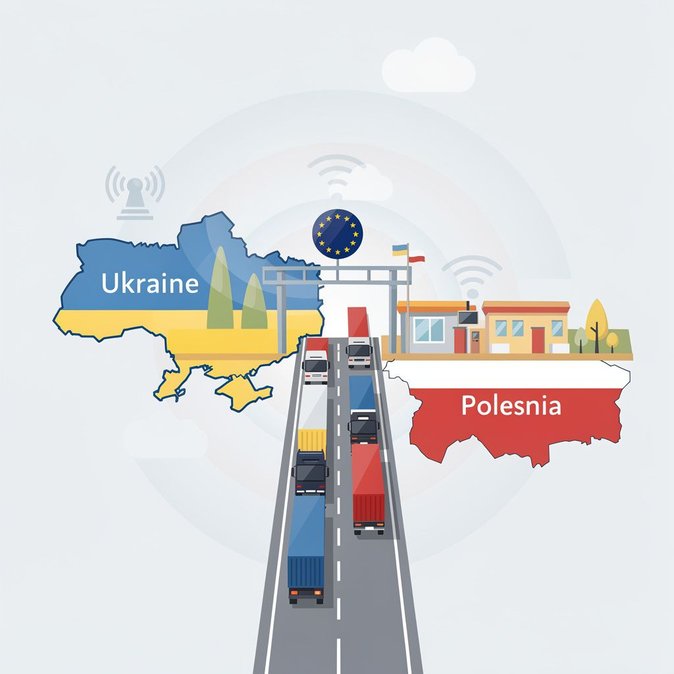
Poland’s Ministry of the Interior and Administration (MSWiA) confirmed on 22 October that it is prepared to let Ukrainian border-guard and customs officers carry out controls on Polish territory should Russian attacks render Ukrainian checkpoints unsafe. The statement – first reported by PAP and summarised by Autonews – stresses that any relocation would operate as a **joint control**, meaning vehicles would stop only once, with inspectors from both countries working side-by-side. Although five Polish-Ukrainian posts already use joint control on the Ukrainian side, the legal basis for doing the same inside the Schengen Area is more complicated. Under EU rules, officials from a non-EU country cannot conduct checks in the Union without a bilateral treaty and prior notification to the European Commission. Warsaw and Kyiv have been negotiating such an accord since 2025, but political reservations in the European Parliament – notably from some MEPs who question the reliability of Ukrainian agencies – have slowed progress. Trucking associations welcomed the signal. Missile and drone strikes have forced repeated evacuations of Ukrainian facilities at Yahodyn–Dorohusk, Zosin and other busy crossings this autumn, freezing clearance for hours at a time. Moving formalities to the Polish side would let flows continue even during air-raid alerts, though it would not in itself increase physical capacity. Analysts note that average daily freight demand on the corridor already outstrips available slots by roughly 20 %, so queues could persist unless staffing and parking space are also expanded. For logistics managers the key takeaway is to keep using Ukraine’s e-Queue reservation system but plan contingencies. Carriers should equip drivers with extra fuel and supplies and monitor both countries’ border-guard Telegram channels for real-time diversion instructions. In the medium term, companies may need to adjust routing and delivery schedules once a joint-control pilot is launched, likely in 2027 if the treaty clears Brussels. Ultimately, the announcement underlines Poland’s determination to keep its busiest eastern trade artery functioning despite the war next door. By offering safe ground for inspections, Warsaw hopes to protect lives, maintain export revenue for Ukraine, and reassure EU shippers that the so-called Solidarity Lanes will remain open through winter.