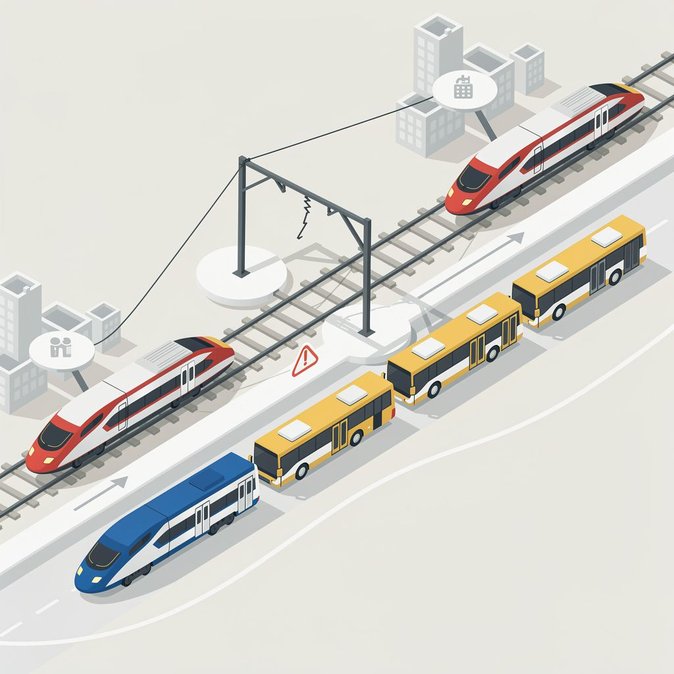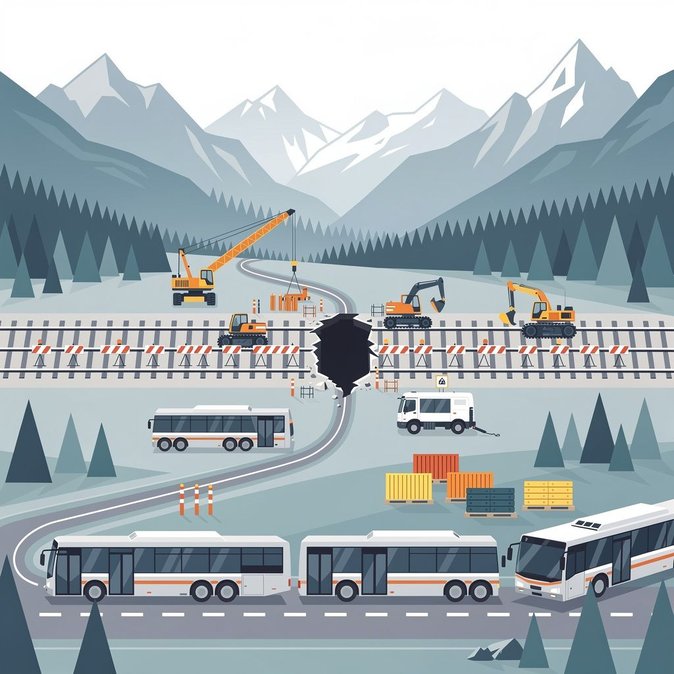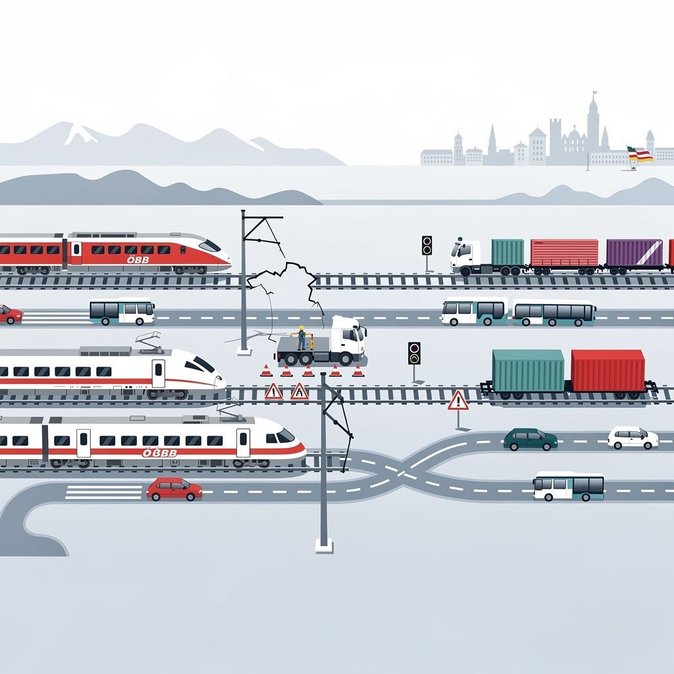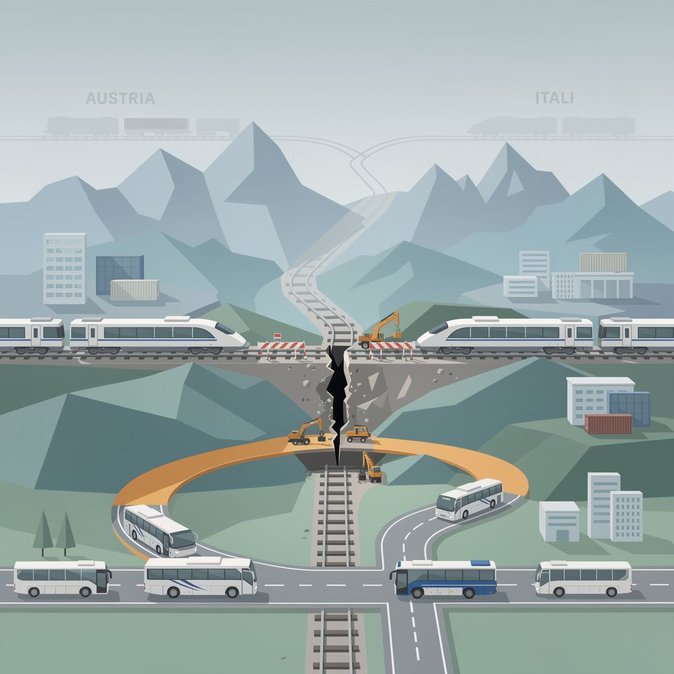
At exactly 01:00 on 18 July, ÖBB, Deutsche Bahn and Italy’s Trenord suspended all passenger trains on the Brenner line between Innsbruck and Bolzano, launching the largest maintenance blockade on this trans-Alpine route in more than a decade. The shutdown—scheduled to run until 2 August—allows crews to replace switches at Brenner station, realign track near Vahrn for the future Riggertal curve, refurbish the Mühltaltunnel in North Tyrol and carry out multiple smaller works bundled into one intensive window. During the first stage (18–22 July) the line is completely closed south of Gries am Brenner, with rail-replacement buses of the SV300 “Brenner-Express” linking Innsbruck, Brenner Pass and Bolzano every 30 minutes. From 23 July the work front moves northwards and buses will run the entire Innsbruck–Brixen corridor. ÖBB warns that no bicycles can be carried on the buses and that passengers heading for South Tyrol should change to road transport already in Steinach, as Gries offers no interchange. Railjet 80/81 (Munich–Venice) is re-routed via Tarvisio and will not serve Tyrol or South Tyrol during the blockade. The Brenner tunnel closure severs, for 15 days, one of Europe’s busiest business-travel corridors that normally carries 250 international trains daily. Cross-border commuters working for automotive suppliers around Innsbruck and Bolzano must endure considerably longer journey times, while forwarders have shifted high-value freight to road or to the Tauern line via Salzburg. Logistics analysts estimate that the detours will add at least €1 million in extra fuel and driver costs for Austrian and Italian hauliers. Tourism operators worry about short-lead cancellations during the peak holiday season, but chambers of commerce on both sides of the border welcomed the decision to condense multiple works into a single summer slot rather than spreading outages across the year. ÖBB has published detailed timetables in German and Italian and urges companies to brief travelling staff and arrange early airport connections: extra coaches have been laid on between Innsbruck and Munich Airport, and Vienna–Innsbruck domestic flights show higher load factors for the next fortnight. The project is also a dry run for 2032, when the new Brenner Base Tunnel will open and the legacy line will be re-purposed primarily for regional traffic. Until then, today’s blockade serves as a reminder that ageing Alpine infrastructure still needs traditional maintenance windows— with significant, if temporary, consequences for global mobility.