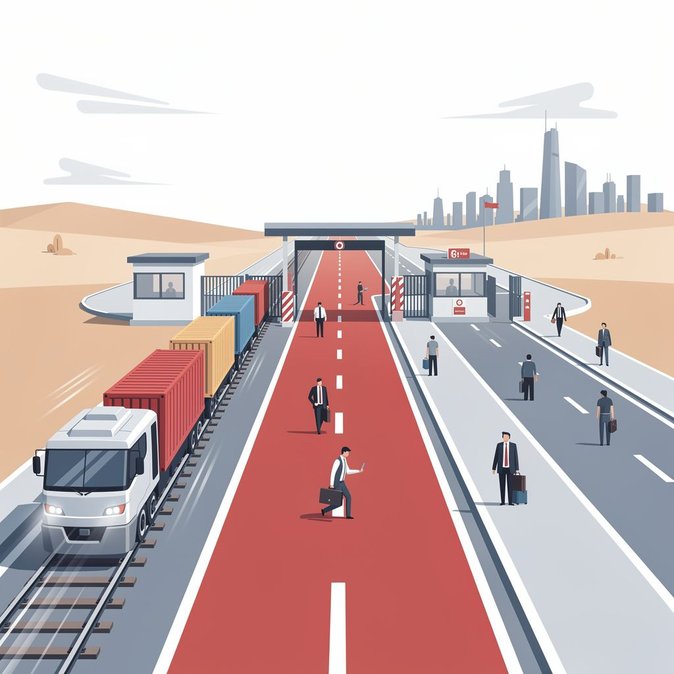
During a three-day inspection tour that concluded on 16 July but was reported on 18 July, Vice-Premier He Lifeng told officials in Inner Mongolia to “build a high-standard gateway for northbound openness” and slash transit times at the Manzhouli rail and road ports, China’s busiest crossings with Russia and Mongolia. Manzhouli processes more than 4,000 China-Europe freight wagons a month and close to 20 percent of all cross-border truck cargo headed for Eurasian Economic Union markets. Yet average customs-clearance time for containers still hovers around 6.5 hours—well above the 4-hour target set by the State Council. He Lifeng instructed the local free-trade zone (FTZ) administration to adopt “single-window, one-stop” declarations, expand 24-hour operations and integrate radio-frequency identification (RFID) seals so that trucks can clear both Chinese and Russian checkpoints without stopping. For corporate shippers, the promised changes could shave one to two days off end-to-end rail transit between eastern China and European hubs such as Duisburg. Mobility teams moving expatriate household goods by rail stand to benefit from shorter storage times and reduced demurrage charges. The FTZ will also pilot a “green channel” for APEC Business Travel Card holders driving company vehicles across the border, easing rotation schedules for engineering personnel supporting renewable-energy projects in Siberia. The visit signals Beijing’s belief that land ports are as important to global mobility as airports. The Ministry of Commerce is drafting guidelines that would allow FTZs like Manzhouli to issue on-arrival work permits valid for 90 days to foreign technicians arriving by road or rail—a move intended to support Belt and Road infrastructure contracts in the region. Enterprises with staff movements through northern China should monitor implementation closely: the General Administration of Customs is expected to publish the first batch of revised clearance procedures in August, and pre-registration on the ‘China LandPort’ digital platform will likely become mandatory.
Source: CPC News/People’s Daily