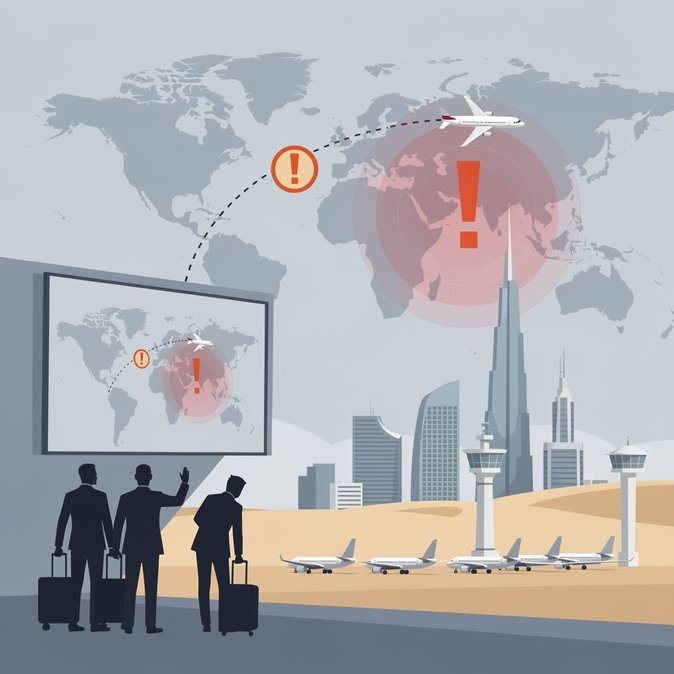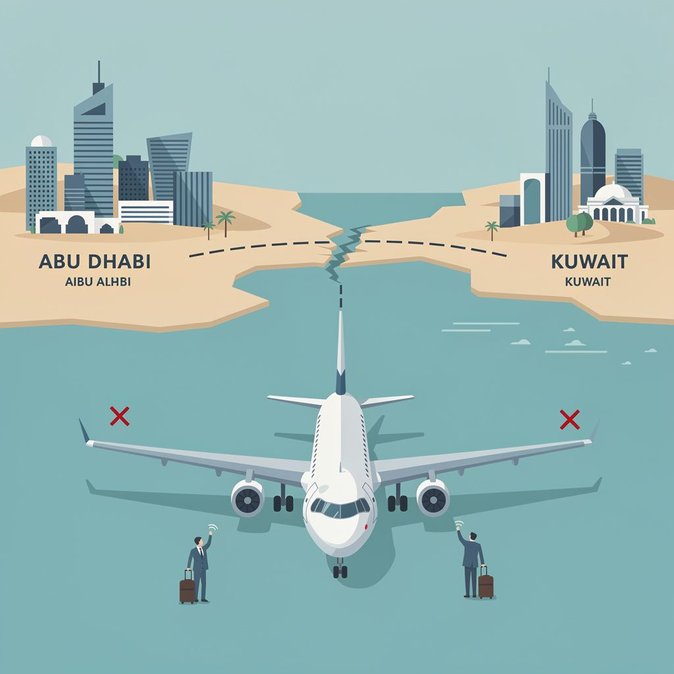
Air travel to, from and through the United Arab Emirates faced renewed disruption on 21 July 2026 after several carriers announced short-notice schedule changes linked to the latest spike in US-Iran hostilities. Gulf News reports that Air France has suspended all Dubai flights until at least 27 July and pushed back its Riyadh and Beirut resumptions, while Etihad Airways has extended the cancellation of its twice-daily Abu Dhabi–Kuwait service (EY653/654) through 24 July. Emirates, flydubai and Air Arabia have each scrubbed multiple rotations to Kuwait, Bahrain and Abha. Although Dubai International Airport remains “pretty much at full capacity”, chief executive Paul Griffiths acknowledged that more than half a dozen European and North American airlines are still absent because of insurance, regulatory and risk-management hurdles. Behind the scenes, carriers are lengthening flight paths to avoid restricted airspace over parts of Iran and Iraq, adding up to three hours to some routings and squeezing already-tight operating margins during the peak summer season. Industry analysts say the detours are costing wide-body operators up to US$25,000 per round-trip in extra fuel and crew costs, a burden that will ultimately filter down to corporate travel budgets. HR and mobility managers with personnel transiting the Gulf this week should re-check booking references every few hours, build additional lay-over buffers and keep travellers’ mobile contact details up to date with the airline. Immigration queues remain largely unaffected, but baggage delays are being reported where aircraft are swapped at short notice. The US State Department’s Worldwide Caution bulletin, re-issued overnight, underscores the fragility of the situation and is already being cited by global insurers as justification for higher ‘war-risk’ premiums on certain routes. With the conflict timeline highly uncertain, mobility teams are advised to maintain contingency plans for remote work or rapid redeployment of key staff should regional airspace tighten further.
Source: Gulf News