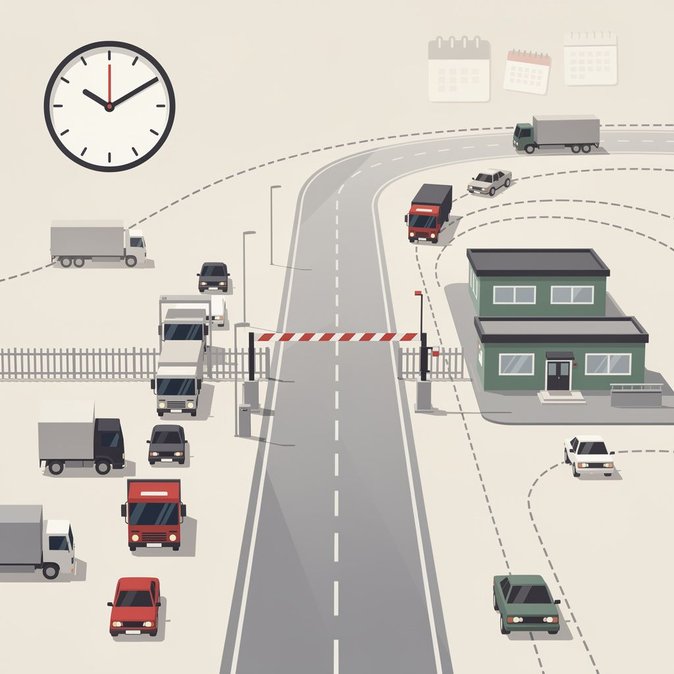
The European Commission released its annual “State of the Schengen” report on 20 July 2026, the first to cover the bloc-wide Entry/Exit System (EES) that became fully operational on 10 April. While praising member states for reducing illegal crossings by 14 percent in 2025, the document singles out Poland—as one of five external-border countries—where additional biometric kiosks are needed to handle summer peaks. The report notes that Warsaw Chopin Airport processed 51 percent more third-country nationals during May–June 2026 than in the same period a year earlier, largely due to visa-free travel from Gulf states and India. With just 68 automated EES kiosks currently installed, the airport risks average enrolment times exceeding the EU’s three-minute benchmark on days when charter traffic overlaps with long-haul arrivals. For employers, the practical impact is clear: posted workers and business visitors from outside the EU should be advised to allow extra time for first entry into the Schengen Area via Poland, particularly if travelling with family members whose fingerprints may be harder to capture on first attempt. The Commission recommends that Poland draw on the €94 million earmarked under the Internal Security Fund to boost capacity by 30 percent before 31 March 2027. Beyond airport bottlenecks, the report urges Poland to leverage the EES database for “smarter” land-border risk analysis, integrating biometric alerts with vehicle-licence-plate recognition on the Belarusian and Ukrainian frontiers. If implemented, this could lead to more targeted—and therefore faster—controls for compliant logistics operators, but also swifter detention for over-stayers flagged by the system. The government has 60 days to submit an action plan. Industry groups such as the Polish Business Roundtable are pressing for consultation, warning that lack of stakeholder input during the 2025-26 pilot phase led to inconsistent kiosk placement and flight-connection misses. Mobility managers should monitor forthcoming drafts; failure to meet EU performance targets could see carriers fined under the Schengen Borders Code for transporting inadequately documented passengers.
Source: European Commission