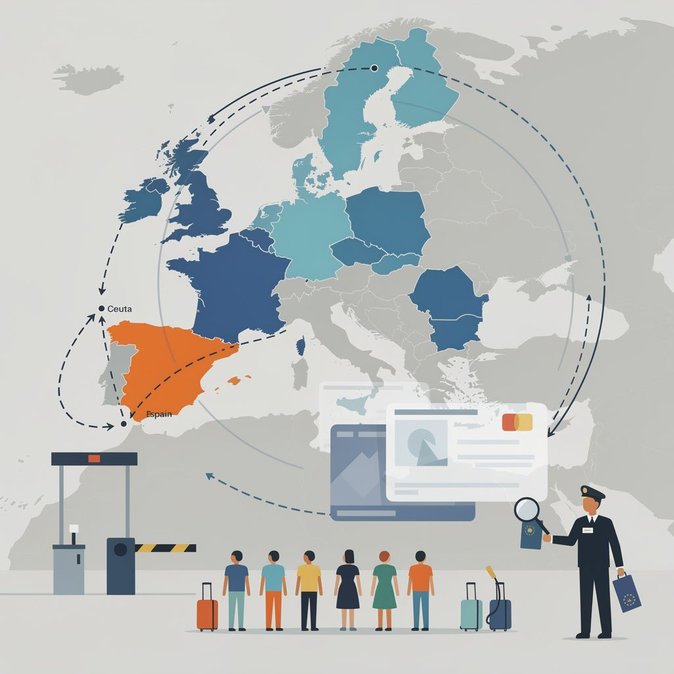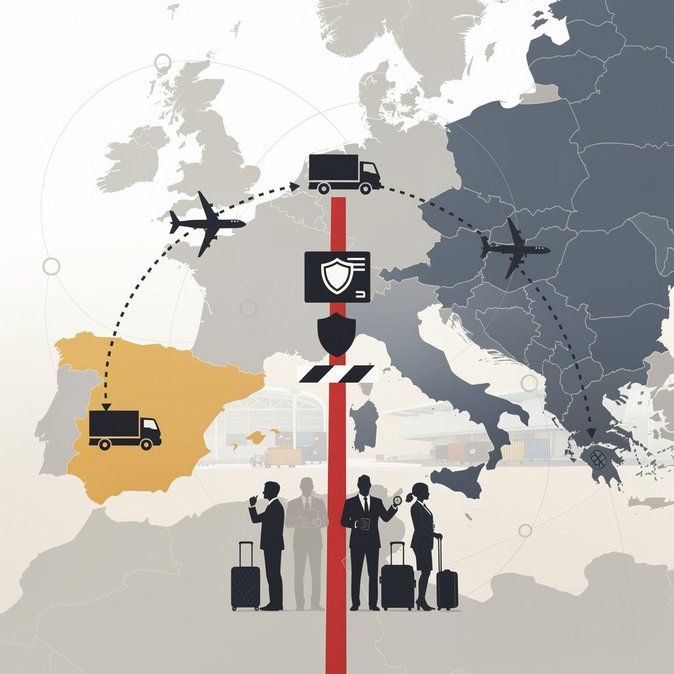
Italy has unexpectedly suspended the Schengen free-movement regime with Spain in response to the sudden surge of irregular arrivals in Spain’s North-African enclave of Ceuta. The Interior Ministry order—announced late on 31 July and brought into force on 1 August—authorises police at Italian airports, seaports and land frontiers to carry out “targeted and selective” checks on all third-country nationals arriving from Spain. Although Spanish and other EU/EEA citizens remain exempt, the move effectively ends more than two decades of uninterrupted passport-free travel on one of Europe’s busiest intra-Schengen corridors. For Austria, the repercussion is immediate. Every day hundreds of business passengers use Rome-Fiumicino, Milan-Malpensa and Venice as hubs for Vienna-Spain connections; these travellers now face an additional document inspection and potential delays of up to 40 minutes, according to estimates from Vienna Airport’s network-planning unit. Lufthansa Group carriers—Austrian Airlines and ITA Airways in particular—have begun pre-sending API (Advance Passenger Information) to Italian authorities to minimise queueing, but the carriers are advising passengers to allow extra transfer time and to keep printed copies of residence permits or multiple-entry visas ready at the gate. The Austrian Federal Ministry for European and International Affairs (BMEIA) upgraded its travel advice on the morning of 2 August, warning that proof of onward travel and accommodation may be requested by Italian border guards even during an airside connection. The Chamber of Commerce’s mobility task-force is already fielding calls from export-oriented SMEs whose technicians shuttle between Styria, northern Italy and Catalonia on tight schedules. Logistic companies are similarly worried: truck drivers of non-EU nationality who route via Genoa ferries to Barcelona will again need to carry passports instead of relying solely on EU-issued ID cards. While the Italian government insists the measure is temporary and proportional, Brussels is uneasy. Under Article 25 of the Schengen Borders Code, internal border controls should be a last resort and limited to six months. Austria has its own precedent—Vienna has maintained spot checks on the Slovak and Czech borders since 2022—and officials in the Interior Ministry privately acknowledge that Italy’s decision could embolden other members to act unilaterally. If cascading suspensions occur, the administrative burden on Austrian companies moving staff across Europe could rise sharply, undermining one of the cornerstones of the single market. A meeting of EU home-affairs ministers scheduled for 5 August will review the situation. Vienna’s delegation is expected to push for a coordinated Frontex support package for Spain and a rapid return to normal Schengen operations. Until then, mobility managers in Austria should brief travellers, update assignment timelines, and verify that assignees from visa-required countries carry the correct documentation when transiting Italy on the way to or from Spain.
Source: Euronews