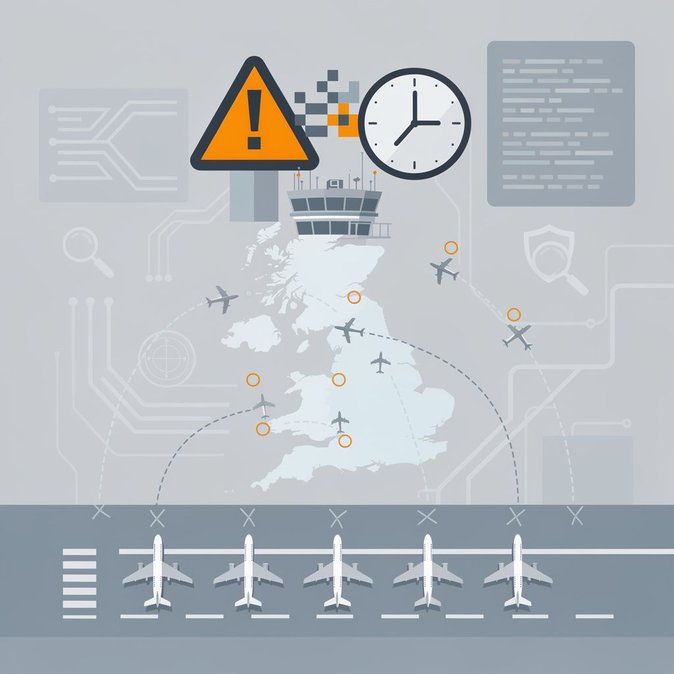
Britain’s National Air Traffic Services (NATS) has confirmed that the six-hour air-space restrictions which paralysed UK aviation on 8 September were triggered by a coding defect that executed in «the space of a millisecond». A preliminary report released on 19 September says the fault corrupted flight-data updates, forcing controllers to cap aircraft movements and ultimately leading to 2,145 cancellations—more than 330,000 passengers were affected. When the system tried to allocate an aircraft identification code during a manual request, a higher-priority message interrupted the process. On resumption, a latent software bug produced corrupted output that spread through downstream systems. With radar identification at risk, NATS imposed flow restrictions while engineers rebooted and re-loaded data, a process that took about six hours. Although normal operations resumed that evening, the knock-on effect lasted two days as aircraft and crews were out of position. Cirium data cited in the report show 1,746 cancellations on 8 September and another 399 the following day. British Airways alone axed nearly 550 services. The disruption had global reach: Etihad, Emirates and other Gulf carriers reported delays and re-routes on UK–Middle East sectors. Transport Secretary Heidi Alexander has ordered an independent review into the resilience of the UK’s air-traffic infrastructure; NATS says a permanent software fix is being tested and that flight safety was never compromised. For corporate travel managers, the incident underscores the fragility of digitally-dependent air-space systems and the value of contingency planning. Companies should review ticketing flexibility clauses, Duty-of-Care tracking tools and alternative routing options for key UK corridors. Mobility teams moving staff to or from Britain in the coming weeks should anticipate residual crew-rostering imbalances and advise travellers to monitor schedules closely.
Source: Gulf News