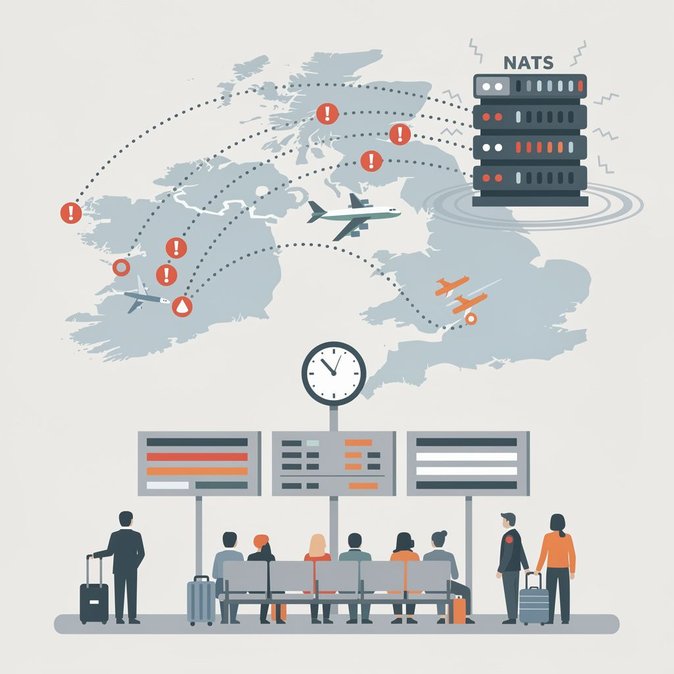
Ryanair has issued an unusually pointed press release after yet another system failure at the UK’s National Air Traffic Services (NATS) Prestwick centre on Monday, 21 September. The outage has delayed more than 140 Ryanair flights, hitting routes into and out of Dublin, Cork and Shannon as well as services across Scotland and northern England. Coming less than two weeks after a separate NATS breakdown on 8 September—which disrupted over 2,000 European flights—the latest failure has reignited questions about ATC resilience on Ireland’s busiest short-haul corridors. Ryanair estimates that 25,000 passengers are experiencing delays of up to three hours, with knock-on effects expected to ripple through its Tuesday schedule. The airline is calling for the resignation of NATS CEO Martin Rolfe, accusing the agency of providing “worthless” mitigation plans in a report released only three days earlier. For corporate mobility managers, the operational details matter more than the rhetoric: Ryanair has re-timed dozens of rotations, forcing same-day travellers to re-book meetings and triggering duty-of-care notifications for staff stranded overnight. Irish exporters relying on just-in-time components should anticipate late-afternoon collections rolling into evening hours. Ground-transport providers at Dublin Airport report taxi queues of up to 45 minutes as arrival waves bunch. Multinational firms are being advised to check whether time-critical travellers can be rerouted through continental hubs or on Aer Lingus trans-border services not controlled by Prestwick. Although the Air Navigation Service Provider falls under UK jurisdiction, the incident underscores Ireland’s exposure to events across the Irish Sea: roughly 65 per cent of departures from Dublin fly through UK-managed airspace in their first 15 minutes. That dependency is now squarely on the radar of Ireland’s Department of Transport, which is expected to raise contingency options at this week’s EU ministerial in Dublin.
Source: Ryanair Corporate Press Release