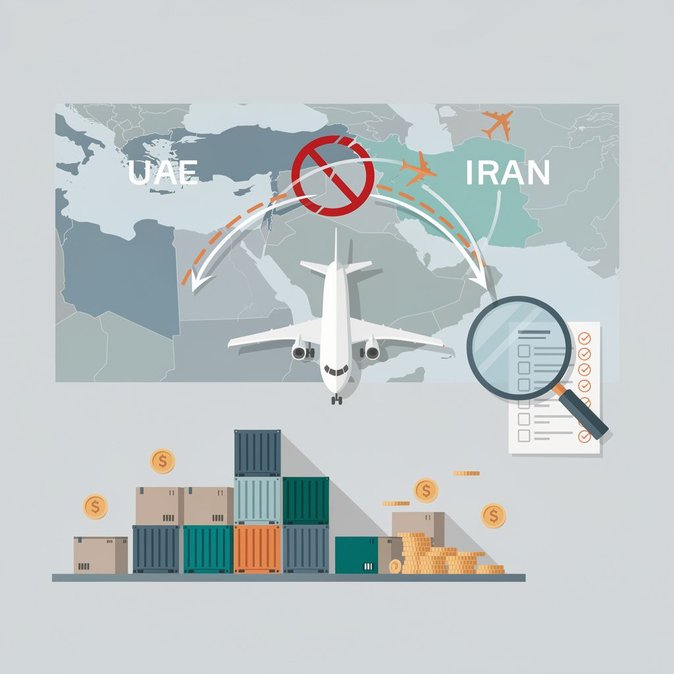
The UAE’s General Civil Aviation Authority (GCAA) has ordered an immediate suspension of all passenger and cargo flights operated by Iranian carriers to and from the Emirates. The notice, issued on the evening of 24 September, came hours after Washington expanded secondary sanctions that bar Iranian airlines from using foreign airports and ground-handling services. Although the measure does not affect UAE-based airlines, it removes more than 70 weekly services linking Dubai, Sharjah and Abu Dhabi with Tehran, Shiraz, Mashhad and Isfahan. Industry analysts say the suspension could strand up to 12,000 travellers over the next week, many of whom use Dubai International Airport as a transit hub onward to Asia, Europe and North America. UAE-resident Iranians who routinely commute for family and business reasons are being advised to re-book on third-country carriers or reroute via Doha or Istanbul. Air-freight forwarders have also been told to halt bookings on Iranian aircraft. Dubai’s Jebel Ali Free Zone hosts one of the region’s busiest perishables centres, and exporters of fresh produce and pharmaceuticals are scrambling to arrange alternative capacity on Emirates SkyCargo or road links through Oman. Logistics experts warn that cold-chain costs could spike by 20-25 per cent if the suspension drags on beyond a fortnight. Law firms specialising in trade compliance note that UAE companies must now conduct enhanced due-diligence checks to ensure that re-exported goods are not ultimately moved on Iranian aircraft, which could expose firms to US penalties. Businesses with dual-UAE–Iran supply chains—particularly in construction materials and auto parts—are urged to review contracts for force-majeure provisions and consider alternative incoterms. For travellers, the practical advice is simple: check itineraries, keep all ticket receipts for refund claims, and monitor the GCAA and airline channels daily. UAE authorities say the ban will remain until “further notice,” but aviation consultants expect any review to be contingent on the geopolitics of US-Iran talks rather than purely operational factors.
Source: Al Khaleej