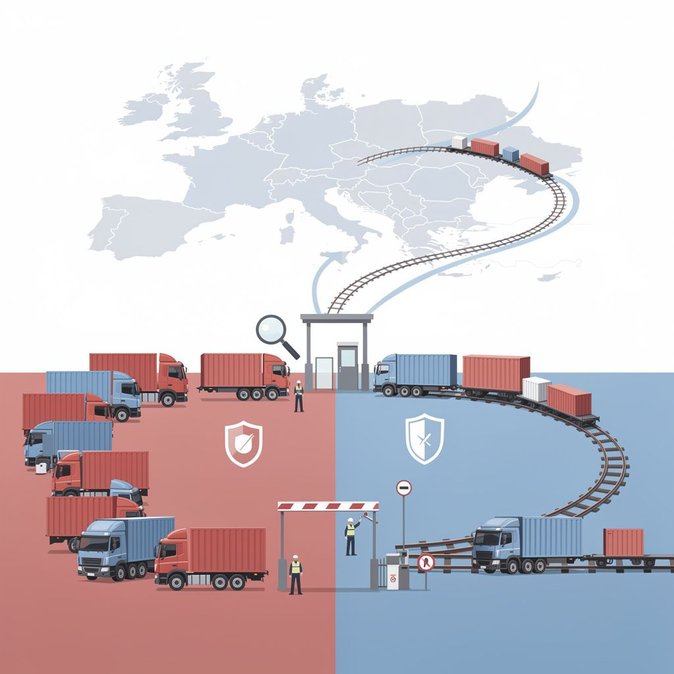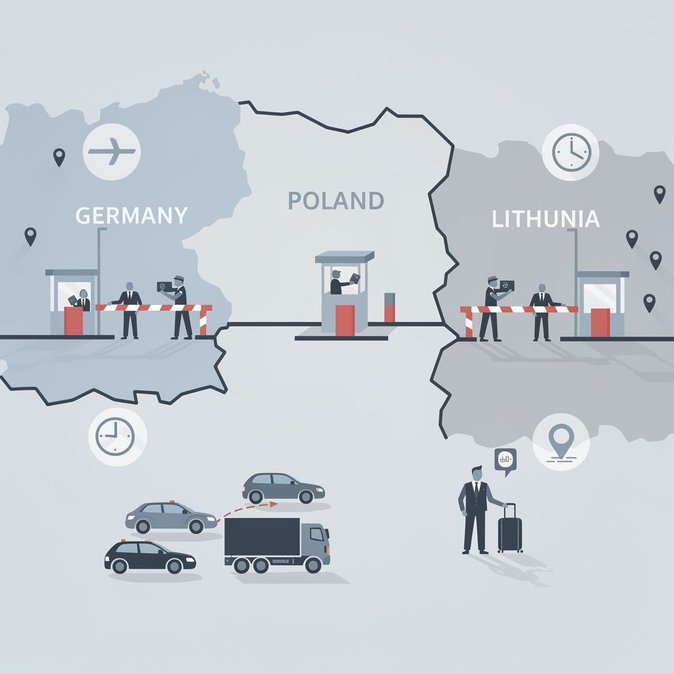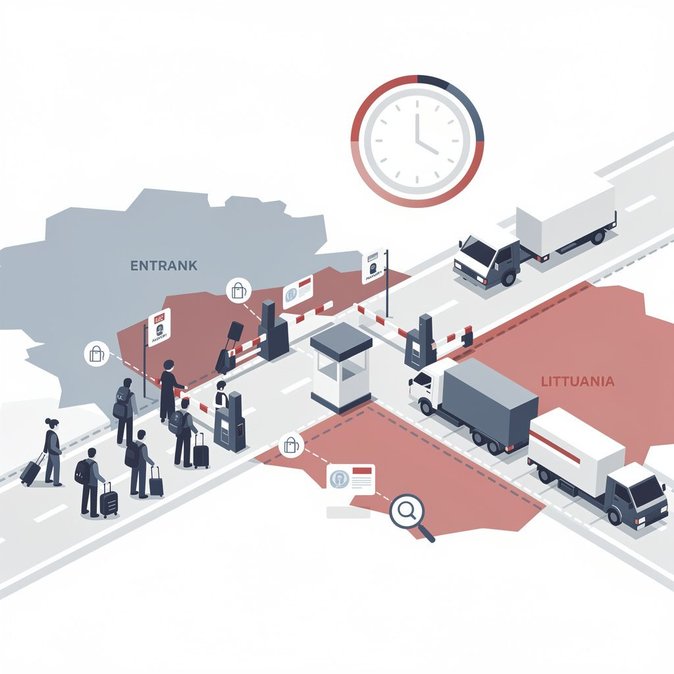
Poland’s Ministry of the Interior and Administration confirmed on 1 October 2026 that the temporary checks it re-introduced on its land borders with Germany and Lithuania in July 2025 will be extended by a further six months, to 30 March 2027. The decision, published shortly before the current authorisation expired at midnight, was notified to the European Commission under Article 25 of the Schengen Borders Code. Warsaw argues that the measure is necessary to manage what it calls “persistent migratory pressure” on both frontiers. According to interior-ministry data, since July 2025 more than 2 500 people have been refused entry—roughly split between the German (≈1 200) and Lithuanian (≈1 300) crossing points. Officials say most of the refused travellers lacked valid travel documents or were suspected of using forged visas. For business travellers, the extension means continued spot checks on coaches, private cars and rail services that normally enjoy passport-free travel inside Schengen. Companies moving goods by road should also expect document inspections and potential waiting-time spikes at major crossings such as Świecko–Frankfurt (Oder) and Budzisko–Kalvarija. Forwarders are already advising drivers to carry proof of accommodation and employment as well as standard CMR paperwork to avoid delays. Under Schengen rules, internal-border controls should remain exceptional and proportionate. With this latest prolongation Poland is using the final six-month window allowed under Article 25a before it must either lift controls or invoke an entirely new threat assessment. Legal experts therefore expect renewed debate in Brussels on how to balance free movement with security concerns—especially as Sweden, Austria and Denmark are running parallel controls. Corporate mobility managers should alert travellers to the possibility of queuing at secondary roads where ad-hoc patrols operate. Carriers shipping “just-in-time” components from Germany’s automotive belt into Polish factories are most exposed; contingency buffers of 3–4 hours are recommended until traffic patterns stabilise.
Source: Reuters via Internazionale