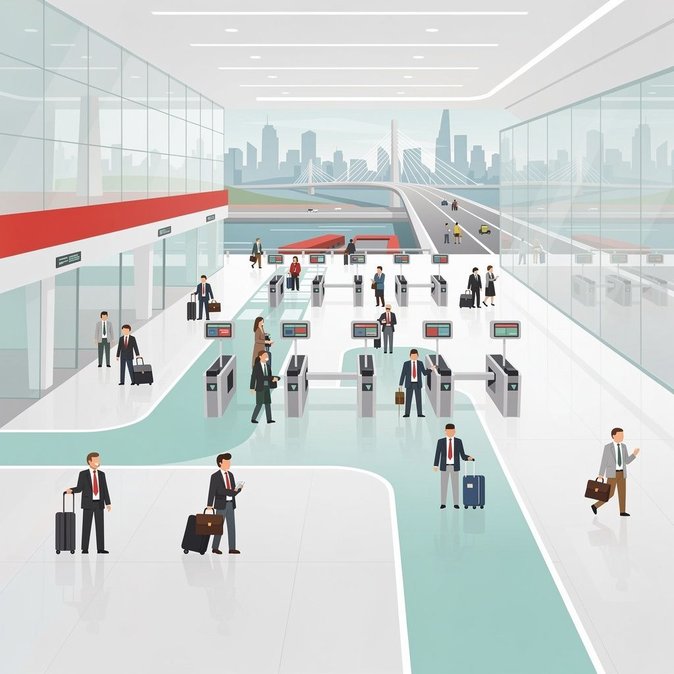
Transport Secretary Mabel Chan hailed the 12 October reopening of Huanggang Port as a “proof-of-concept” for seamless Greater Bay Area mobility after the checkpoint handled 79,500 passenger movements and 8,000 vehicle crossings in its first 24 hours of service. Statistics from Shenzhen border inspectors show 41,300 entries into Hong Kong and 38,200 departures on opening day. The port, rebuilt over six years at a cost of HK$35 billion, is the first to run a full “collaborative inspection and joint clearance” model: travellers queue only once and clear both jurisdictions in a single automated lane. Early tests clocked average clearance times of 50–70 seconds for enrolled users, compared with six minutes at legacy counters. Bus and coach operators reported smooth onward connections to Tsim Sha Tsui and Shenzhen’s Futian CBD, but have drafted extra drivers for the Chung Yeung holiday weekend, when authorities expect volumes to spike above 120,000 daily. Freight forwarders are also eyeing the port’s 24-hour cargo hall, which will open in November, shaving transit times for just-in-time electronics shipments. Analysts say the success of Huanggang will shape future upgrades at Luohu and Man Kam To crossings, and could accelerate discussions on integrating health-code data into immigration systems—an issue that resurfaced during last year’s avian-influenza scare. Corporate mobility managers should note that travellers must still carry both their Hong Kong ID card and Mainland Travel Permit, even though only one document is scanned, and that unregistered visitors continue to face manual-counter queues.
Source: South China Morning Post